首先,我们先来简单说一下,require.js的原理:
1、载入模块
2、通过模块名解析出模块信息,以及计算出URL
3、通过创建SCRIPT的形式把模块加载到页面中。
4、判断被加载的脚本,如果发现它有依赖就去加载依赖模块。如果不依赖其它模块,就直接执行factory方法
5、等所有脚本都被加载完毕就执行加载完成之后的回调函数。
从今天起,我们跟着我们简单的例子,通过跟踪代码,来了解require.js的源码。
 1 <!DOCTYPE html>
 2 <html lang="en">
 3
 4 <head>
 5     <meta charset="UTF-8">
 6     <title>Document</title>
 7     <!-- 引入require.js -->
 8     <script data-main="./test.js" src="./require.js"></script>
 9     </script>
10     <script>
11     require(['a', 'b'], function(a, b) {
12         a.printA();
13         b.printB();
14     });
15     </script>
16 </head>
17
18 <body>
19 </body>
20
21 </html>
执行网页时,如果需要使用require.js作为模块加载器时,我们首先需要引入require.js。
1 <!-- 引入require.js -->
2 <script data-main="./test.js" src="./require.js"></script>
 1 // a.js
 2 define(function() {
 3     return {
 4         printA: console.log("I am A")
 5     }
 6 });
 7
 8 // b.js
 9 define(function() {
10     return {
11         printB: console.log("I am B")
12     }
13 });
打开require.js文件我们可以发现,文件中首先定义了三个全局变量,之后便是一个自执行函数。因此在加载require.js文件时,自动执行自执行函数中的内容。
1 var requirejs, require, define;
2 (function(global, setTimeout) {
3     // 此处省略...
4 }(this, (typeof setTimeout === 'undefined' ? undefined : setTimeout)));
首先我们,可以将require.js分为三个部分,
1)定义全局变量和帮助函数
2)模块加载核心部分
3)定义require和define两个方法,以及项目入口。

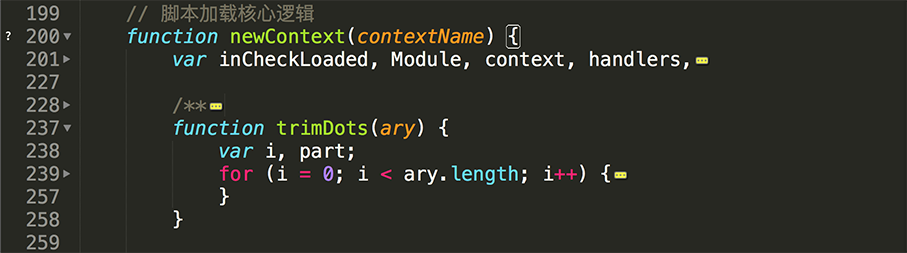
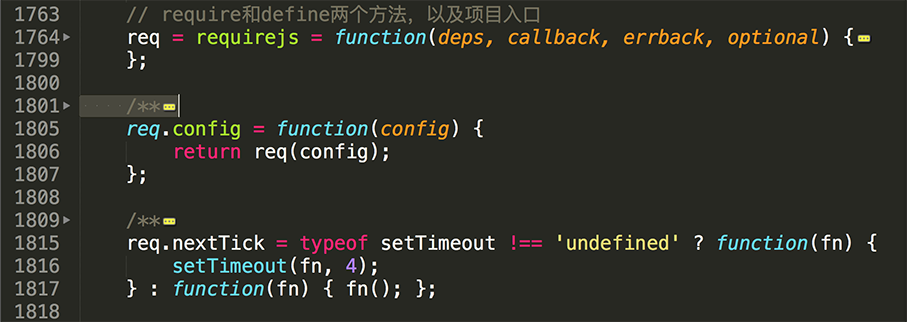
如果我们使用跟踪代码的话,会发现文件一直都在定义变量和方法,一直执行到req({});这个语句调用req方法,传入一个空对象作为参数,用于创建一个默认上下文。现在我们跟踪代码,简单了解如何创建一个默认上下文。执行下面这段代码
 1 req = requirejs = function(deps, callback, errback, optional) {
 2     // 此时传入的参数时空对象
 3
 4     //Find the right context, use default
 5     var context, config,
 6         contextName = defContextName; // 默认上下文名为_
 7
 8     // Determine if have config object in the call.
 9     // 此时传入一个空对象作为配置对象
10     if (!isArray(deps) && typeof deps !== 'string') {
11         // deps is a config object
12         config = deps;
13         if (isArray(callback)) {
14             // Adjust args if there are dependencies
15             deps = callback;
16             callback = errback;
17             errback = optional;
18         } else {
19             deps = [];
20         }
21     }
22     // config为空对象,没有设置context属性,因此不设置上下文名
23     if (config && config.context) {
24         contextName = config.context;
25     }
26
27     // getOwn函数:帮助函数,用于获取对象中对应属性的值,此时返回值为undefined
28     context = getOwn(contexts, contextName);
29     if (!context) {
30         /*
31             s = req.s = {
32                 contexts: contexts,
33                 newContext: newContext
34             };
35         */
36         // 初始化时,执行下面这段代码,调用req.s中的newContext方法创建默认上下文
37         // newContext方法时require.js的核心,此时我们只需要了解,它创建了一个默认上下文
38         // 并且这个函数,只执行一次,之后的上下文,都是通过闭包,在闭包中,修改默认上下文的信息
39         // 保存自己的上下文信息
40         context = contexts[contextName] = req.s.newContext(contextName);
41     }
42
43     // 此时config为空对象,执行configure方法几乎没什么作用
44     if (config) {
45         context.configure(config);
46     }
47
48     // 跟踪代码可以发现调用context.require=>context.makeRequire()=>localRequire
49     // context.require = context.makeRequire();
50     // function localRequire(deps, callback, errback)
51     // 返回一个localRequire
52     return context.require(deps, callback, errback);
53 };
到这里,以及完成了context初始化。
然后继续执行require({});下面的语句
 1 // 重置列出的函数
 2 //Exports some context-sensitive methods on global require.
 3 each([
 4     'toUrl',
 5     'undef',
 6     'defined',
 7     'specified'
 8 ], function(prop) {
 9     //Reference from contexts instead of early binding to default context,
10     //so that during builds, the latest instance of the default context
11     //with its config gets used.
12     req[prop] = function() {
13         var ctx = contexts[defContextName];
14         return ctx.require[prop].apply(ctx, arguments);
15     };
16 });
17
18 // 获取添加脚本的父亲节点
19 if (isBrowser) {
20     head = s.head = document.getElementsByTagName('head')[0];
21     //If BASE tag is in play, using appendChild is a problem for IE6.
22     //When that browser dies, this can be removed. Details in this jQuery bug:
23     //http://dev.jquery.com/ticket/2709
24     baseElement = document.getElementsByTagName('base')[0];
25     if (baseElement) {
26         head = s.head = baseElement.parentNode;
27     }
28 }
以上仅仅是创建了默认上下文,并进行简单的处理。