1.三元运算
if条件成立的结果 if 条件 else 条件不成立的结果
例如:
a=20
b=10
c=a if a>b else b
print(c)
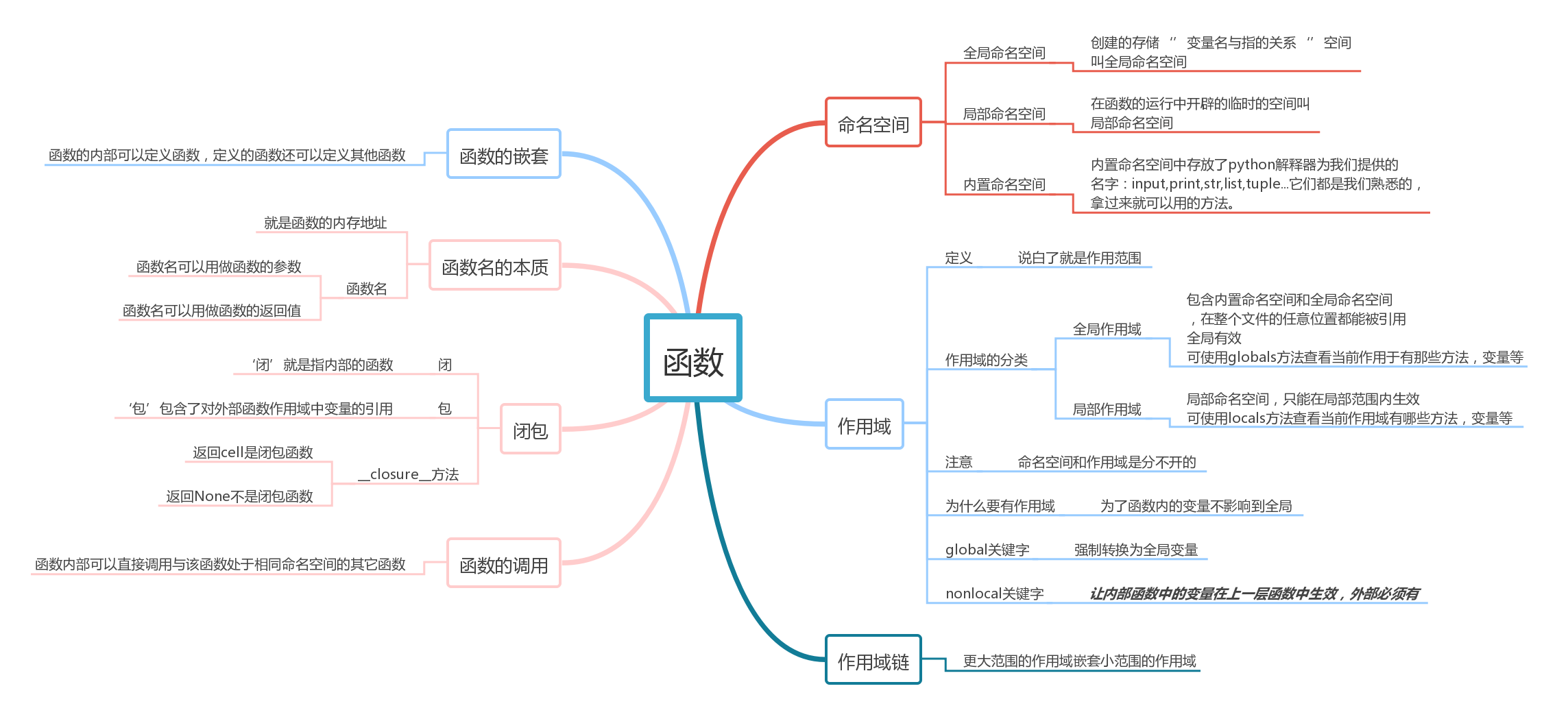
2.命名空间
- 全局命名空间:创建的存储“变量名与值的关系”的空间叫做全局命名空间
- 局部命名空间:在函数的运行中开辟的临时的空间叫做局部命名空间
- 内置命名空间:内置命名空间中存放了python解释器为我们提供的名字:input,print,str,list,tuple...它们都是我们熟悉的,拿过来就可以用的方法。

三种命名空间之间的加载顺序和取值顺序:
加载顺序:内置(程序运行前加载)-->全局(从上到下顺序加载进来的)-->局部(调用的时候加载)--->内置
取值:在局部调用:局部命名空间--->全局命名空间--->内置命名空间
站在全局范围找:全局----内置----局部
使用:
全局不能使用局部的
局部的可以使用全局的
3.作用域:就是作用范围
1.命名空间和作用域是分不开的
2.作用域分为两种:
全局作用域:全局命名空间与内置命名空间的名字都属于全局范围
在整个文件的任意位置都能被引用,全局有效
局部作用域:局部命名空间,只能在局部范围内生效
3.站在全局看:
使用名字的时候:如果全局有,用全局的
如果全局没有,用内置的
4.为什么要有作用域?
为了函数内的变量不会影响到全局
5.globals方法:查看全局作用域的名字【print(globals())】
locals方法:查看局部作用域的名字【print(locals())】


1 def func():
2     a = 12
3     b = 20
4     print(locals())
5     print(globals())
6
7 func()
站在全局看,globals is locals
global关键字:强制转换为全局变量
1 # x=1
2 # def foo():
3 #     global  x  #强制转换x为全局变量
4 #     x=10000000000
5 #     print(x)
6 # foo()
7 # print(x)
8 # 这个方法尽量能少用就少用
nonlocal让内部函数中的变量在上一层函数中生效,外部必须有
 1 # x=1
 2 # def f1():
 3 #     x=2
 4 #     def f2():
 5 #         # x=3
 6 #         def f3():
 7 #             # global x#修改全局的
 8 #             nonlocal x#修改局部的(当用nonlocal时,修改x=3为x=100000000,当x=3不存在时,修改x=2为100000000 )
 9 #                    # 必须在函数内部
10 #             x=10000000000
11 #         f3()
12 #         print('f2内的打印',x)
13 #     f2()
14 #     print('f1内的打印', x)
15 # f1()
16 # # print(x)
4.函数的嵌套定义
1 def animal():
2     def tiger():
3         print('nark')
4         print('eat')
5     tiger()
6 animal()
5.作用域链
 1 x=1
 2 def heihei():
 3   x='h'
 4   def inner():
 5     x='il'
 6     def inner2():
 7       print(x)
 8     inner2()
 9   inner()
10 heihei()
6.函数名的本质:就是函数的内存地址
1 def func():
2   print('func')
3 print(func)#指向了函数的内存地址
7.函数名可以用做函数的参数

1 def func():
2     print('func')
3
4 def func2(f):
5     f()
6     print('func2')
7 func2(func)
函数名可以作为函数的返回值

return说明1
def func():
    def func2():
        print('func2')
    return func2
f2=func()
f2()
#func2=func()
#func2()


2.
def f1(x):
    print(x)
    return '123'

def f2():
    ret = f1('s')  #f2调用f1函数
    print(ret)
f2()


3.
def func():
    def func2():
        return 'a'
    return func2   #函数名作为返回值

func2=func()
print(func2())
8.闭包:
闭包:1.闭 :内部的函数
2.包 :包含了对外部函数作用域中变量的引用
def hei():
x=20
def inner():
x=10 #如果x定义了,他就用自己的了,就实现不了闭包
print(x)
1 # 闭包的常用形式:
2 def hei():
3   x=20
4   def inner():
5     '''闭包函数'''
6     print(x)
7 return inner()
判断闭包函数的方法:__closure__
 1 #输出的__closure__有cell元素 :是闭包函数
 2 def func():
 3     name = 'eva'
 4     def inner():
 5         print(name)
 6     print(inner.__closure__)
 7     return inner
 8
 9 f = func()
10 f()
11
12
13 #输出的__closure__为None :不是闭包函数
14 name = 'egon'
15 def func2():
16     def inner():
17         print(name)
18     print(inner.__closure__)
19     return inner
20
21 f2 = func2()
22 f2()
闭包获取网络应用
1 # from urllib.request import urlopen
2 # def index(url):
3 #     def inner():
4 #         return  urlopen(url).read()
5 #     return inner
6 # u='http://www.cnblogs.com/Eva-J/articles/7156261.html#_label1'
7 # get = index(u)
8 # print(get())
9.总结
作用域:小范围的可以用大范围的,但是大范围的不能用小范围的
范围从大到小(图)
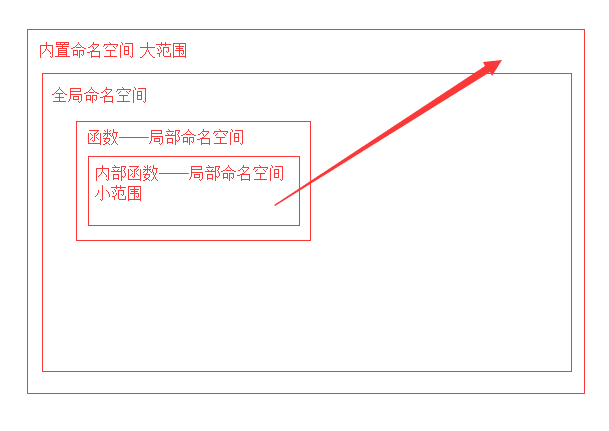
如果在小范围内,如果要用一个变量,是当前这个小范围有的,就用自己的
如果在小范围内没有,就用上一级的,上一级没有的,就用上上级的,以此类推
如果都没有,报错
10.思维导图