协议和编解码是一个网络应用程序的核心问题之一,客户端和服务器通过约定的协议来传输消息(数据),通过特定的格式来编解码字节流,并转化成业务消息,提供给上层框架调用。
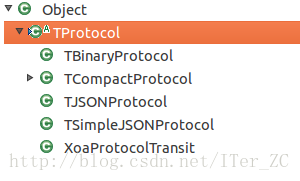
Thrift的协议比较简单,它把协议和编解码整合在了一起。抽象类TProtocol定义了协议和编解码的顶层接口。个人感觉采用抽象类而不是接口的方式来定义顶层接口并不好,TProtocol关联了一个TTransport传输对象,而不是提供一个类似getTransport()的接口,导致抽象类的扩展性比接口差。
TProtocol主要做了两个事情:
1. 关联TTransport对象
2.定义一系列读写消息的编解码接口,包括两类,一类是复杂数据结构比如readMessageBegin, readMessageEnd, writeMessageBegin, writMessageEnd.还有一类是基本数据结构,比如readI32, writeI32, readString, writeString
- public abstract class TProtocol {
- /**
- * Transport
- */
- protected TTransport trans_;
- public abstract void writeMessageBegin(TMessage message) throws TException;
- public abstract void writeMessageEnd() throws TException;
- public abstract void writeStructBegin(TStruct struct) throws TException;
- public abstract void writeStructEnd() throws TException;
- public abstract void writeFieldBegin(TField field) throws TException;
- public abstract void writeFieldEnd() throws TException;
- public abstract void writeFieldStop() throws TException;
- public abstract void writeMapBegin(TMap map) throws TException;
- public abstract void writeMapEnd() throws TException;
- public abstract void writeListBegin(TList list) throws TException;
- public abstract void writeListEnd() throws TException;
- public abstract void writeSetBegin(TSet set) throws TException;
- public abstract void writeSetEnd() throws TException;
- public abstract void writeBool(boolean b) throws TException;
- public abstract void writeByte(byte b) throws TException;
- public abstract void writeI16(short i16) throws TException;
- public abstract void writeI32(int i32) throws TException;
- public abstract void writeI64(long i64) throws TException;
- public abstract void writeDouble(double dub) throws TException;
- public abstract void writeString(String str) throws TException;
- public abstract void writeBinary(ByteBuffer buf) throws TException;
- /**
- * Reading methods.
- */
- public abstract TMessage readMessageBegin() throws TException;
- public abstract void readMessageEnd() throws TException;
- public abstract TStruct readStructBegin() throws TException;
- public abstract void readStructEnd() throws TException;
- public abstract TField readFieldBegin() throws TException;
- public abstract void readFieldEnd() throws TException;
- public abstract TMap readMapBegin() throws TException;
- public abstract void readMapEnd() throws TException;
- public abstract TList readListBegin() throws TException;
- public abstract void readListEnd() throws TException;
- public abstract TSet readSetBegin() throws TException;
- public abstract void readSetEnd() throws TException;
- public abstract boolean readBool() throws TException;
- public abstract byte readByte() throws TException;
- public abstract short readI16() throws TException;
- public abstract int readI32() throws TException;
- public abstract long readI64() throws TException;
- public abstract double readDouble() throws TException;
- public abstract String readString() throws TException;
- public abstract ByteBuffer readBinary() throws TException;
- /**
- * Reset any internal state back to a blank slate. This method only needs to
- * be implemented for stateful protocols.
- */
- public void reset() {}
- /**
- * Scheme accessor
- */
- public Class<? extends IScheme> getScheme() {
- return StandardScheme.class;
- }
- }
所谓协议就是客户端和服务器端约定传输什么数据,如何解析传输的数据。对于一个RPC调用的协议来说,要传输的数据主要有:
调用方
1. 方法的名称,包括类的名称和方法的名称
2. 方法的参数,包括类型和参数值
3.一些附加的数据,比如附件,超时事件,自定义的控制信息等等
返回方
1. 调用的返回码
2. 返回值
3.异常信息
从TProtocol的定义我们可以看出Thrift的协议约定如下事情:
1. 先writeMessageBegin表示开始传输消息了,写消息头。Message里面定义了方法名,调用的类型,版本号,消息seqId
2. 接下来是写方法的参数,实际就是写消息体。如果参数是一个类,就writeStructBegin
3. 接下来写字段,writeFieldBegin, 这个方法会写接下来的字段的数据类型和顺序号。这个顺序号是Thrfit对要传输的字段的一个编码,从1开始
4. 如果是一个集合就writeListBegin/writeMapBegin,如果是一个基本数据类型,比如int, 就直接writeI32
5. 每个复杂数据类型写完都调用writeXXXEnd,直到writeMessageEnd结束
6. 读消息时根据数据类型读取相应的长度
每个writeXXX都是采用消息头+消息体的方式。我们来看TBinaryProtocol的实现。
1. writeMessgeBegin方法写了消息头,包括4字节的版本号和类型信息,字符串类型的方法名,4字节的序列号seqId
2. writeFieldBegin,写了1个字节的字段数据类型,和2个字节字段的顺序号
3. writeI32,写了4个字节的字节数组
4. writeString,先写4字节消息头表示字符串长度,再写字符串字节
5. writeBinary,先写4字节消息头表示字节数组长度,再写字节数组内容
6.readMessageBegin时,先读4字节版本和类型信息,再读字符串,再读4字节序列号
7.readFieldBegin,先读1个字节的字段数据类型,再读2个字节的字段顺序号
8. readString时,先读4字节字符串长度,再读字符串内容。字符串统一采用UTF-8编码
- public void writeMessageBegin(TMessage message) throws TException {
- if (strictWrite_) {
- int version = VERSION_1 | message.type;
- writeI32(version);
- writeString(message.name);
- writeI32(message.seqid);
- } else {
- writeString(message.name);
- writeByte(message.type);
- writeI32(message.seqid);
- }
- }
- public void writeFieldBegin(TField field) throws TException {
- writeByte(field.type);
- writeI16(field.id);
- }
- private byte[] i32out = new byte[4];
- public void writeI32(int i32) throws TException {
- i32out[0] = (byte)(0xff & (i32 >> 24));
- i32out[1] = (byte)(0xff & (i32 >> 16));
- i32out[2] = (byte)(0xff & (i32 >> 8));
- i32out[3] = (byte)(0xff & (i32));
- trans_.write(i32out, 0, 4);
- }
- public void writeString(String str) throws TException {
- try {
- byte[] dat = str.getBytes("UTF-8");
- writeI32(dat.length);
- trans_.write(dat, 0, dat.length);
- } catch (UnsupportedEncodingException uex) {
- throw new TException("JVM DOES NOT SUPPORT UTF-8");
- }
- }
- public void writeBinary(ByteBuffer bin) throws TException {
- int length = bin.limit() - bin.position();
- writeI32(length);
- trans_.write(bin.array(), bin.position() + bin.arrayOffset(), length);
- }
- public TMessage readMessageBegin() throws TException {
- int size = readI32();
- if (size < 0) {
- int version = size & VERSION_MASK;
- if (version != VERSION_1) {
- throw new TProtocolException(TProtocolException.BAD_VERSION, "Bad version in readMessageBegin");
- }
- return new TMessage(readString(), (byte)(size & 0x000000ff), readI32());
- } else {
- if (strictRead_) {
- throw new TProtocolException(TProtocolException.BAD_VERSION, "Missing version in readMessageBegin, old client?");
- }
- return new TMessage(readStringBody(size), readByte(), readI32());
- }
- }
- public TField readFieldBegin() throws TException {
- byte type = readByte();
- short id = type == TType.STOP ? 0 : readI16();
- return new TField("", type, id);
- }
- public String readString() throws TException {
- int size = readI32();
- if (trans_.getBytesRemainingInBuffer() >= size) {
- try {
- String s = new String(trans_.getBuffer(), trans_.getBufferPosition(), size, "UTF-8");
- trans_.consumeBuffer(size);
- return s;
- } catch (UnsupportedEncodingException e) {
- throw new TException("JVM DOES NOT SUPPORT UTF-8");
- }
- }
- return readStringBody(size);
- }
TProtocol定义了基本的协议信息,包括传输什么数据,如何解析传输的数据的基本方法。
还存在一个问题,就是服务器端如何知道客户端发送过来的数据是怎么组合的,比如第一个字段是字符串类型,第二个字段是int。这个信息是在IDL生成客户端时生成的代码时提供了。Thrift生成的客户端代码提供了读写参数的方法,这两个方式是一一对应的,包括字段的序号,类型等等。客户端使用写参数的方法,服务器端使用读参数的方法。
关于IDL生成的客户端代码会在后面的文章具体描述。下面简单看一下自动生成的代码
1. 方法的调用从writeMessageBegin开始,发送了消息头信息
2. 写方法的参数,也就是写消息体。方法参数由一个统一的接口TBase描述,提供了read和write的统一接口。自动生成的代码提供了read, write方法参数的具体实现
3. 写完结束
- public void write_args(org.apache.thrift.protocol.TProtocol prot) throws org.apache.thrift.TException {
- prot.writeMessageBegin(new org.apache.thrift.protocol.TMessage("handle", org.apache.thrift.protocol.TMessageType.CALL, 0));
- handle_args args = new handle_args();
- args.setIdentity(identity);
- args.setUid(uid);
- args.setSid(sid);
- args.setType(type);
- args.setMessage(message);
- args.setParams(params);
- args.write(prot);
- prot.writeMessageEnd();
- }
- public interface TBase<T extends TBase<?,?>, F extends TFieldIdEnum> extends Comparable<T>, Serializable {
- public void read(TProtocol iprot) throws TException;
- public void write(TProtocol oprot) throws TException;
- }
- public static class handle_args <strong>implements org.apache.thrift.TBase</strong><handle_args, handle_args._Fields>, java.io.Serializable, Cloneable {
- private static final org.apache.thrift.protocol.TStruct STRUCT_DESC = new org.apache.thrift.protocol.TStruct("handle_args");
- private static final org.apache.thrift.protocol.TField IDENTITY_FIELD_DESC = new org.apache.thrift.protocol.TField("identity", org.apache.thrift.protocol.TType.STRING, (short)1);
- private static final org.apache.thrift.protocol.TField UID_FIELD_DESC = new org.apache.thrift.protocol.TField("uid", org.apache.thrift.protocol.TType.I64, (short)2);
- private static final org.apache.thrift.protocol.TField SID_FIELD_DESC = new org.apache.thrift.protocol.TField("sid", org.apache.thrift.protocol.TType.STRING, (short)3);
- private static final org.apache.thrift.protocol.TField TYPE_FIELD_DESC = new org.apache.thrift.protocol.TField("type", org.apache.thrift.protocol.TType.I32, (short)4);
- private static final org.apache.thrift.protocol.TField MESSAGE_FIELD_DESC = new org.apache.thrift.protocol.TField("message", org.apache.thrift.protocol.TType.STRING, (short)5);
- private static final org.apache.thrift.protocol.TField PARAMS_FIELD_DESC = new org.apache.thrift.protocol.TField("params", org.apache.thrift.protocol.TType.MAP, (short)6);
- private static final Map<Class<? extends IScheme>, SchemeFactory> schemes = new HashMap<Class<? extends IScheme>, SchemeFactory>();
- static {
- schemes.put(StandardScheme.class, new handle_argsStandardSchemeFactory());
- schemes.put(TupleScheme.class, new handle_argsTupleSchemeFactory());
- }
- public String identity; // required
- public long uid; // required
- public String sid; // required
- public int type; // required
- public String message; // required
- public Map<String,String> params; // required
- /** The set of fields this struct contains, along with convenience methods for finding and manipulating them. */
- public enum _Fields implements org.apache.thrift.TFieldIdEnum {
- IDENTITY((short)1, "identity"),
- UID((short)2, "uid"),
- SID((short)3, "sid"),
- TYPE((short)4, "type"),
- MESSAGE((short)5, "message"),
- PARAMS((short)6, "params");
- }
- // 自动生成的写方法参数的方法,按照字段顺序写,给客户端代码使用
- public void write(org.apache.thrift.protocol.TProtocol oprot, handle_args struct) throws org.apache.thrift.TException {
- struct.validate();
- oprot.writeStructBegin(STRUCT_DESC);
- if (struct.identity != null) {
- oprot.writeFieldBegin(IDENTITY_FIELD_DESC);
- oprot.writeString(struct.identity);
- oprot.writeFieldEnd();
- }
- oprot.writeFieldBegin(UID_FIELD_DESC);
- oprot.writeI64(struct.uid);
- oprot.writeFieldEnd();
- if (struct.sid != null) {
- oprot.writeFieldBegin(SID_FIELD_DESC);
- oprot.writeString(struct.sid);
- oprot.writeFieldEnd();
- }
- oprot.writeFieldBegin(TYPE_FIELD_DESC);
- oprot.writeI32(struct.type);
- oprot.writeFieldEnd();
- if (struct.message != null) {
- oprot.writeFieldBegin(MESSAGE_FIELD_DESC);
- oprot.writeString(struct.message);
- oprot.writeFieldEnd();
- }
- }
- <pre name="code" class="java">// 自动生成的读方法参数的方法,按照字段顺序读,给服务器端代码使用
public void read(org.apache.thrift.protocol.TProtocol iprot, handle_args struct) throws org.apache.thrift.TException {
org.apache.thrift.protocol.TField schemeField;
iprot.readStructBegin();
while (true)
{
schemeField = iprot.readFieldBegin();
if (schemeField.type == org.apache.thrift.protocol.TType.STOP) {
break;
}
switch (schemeField.id) {
case 1: // IDENTITY
if (schemeField.type == org.apache.thrift.protocol.TType.STRING) {
struct.identity = iprot.readString();
struct.setIdentityIsSet(true);
} else {
org.apache.thrift.protocol.TProtocolUtil.skip(iprot, schemeField.type);
}
break;
case 2: // UID
if (schemeField.type == org.apache.thrift.protocol.TType.I64) {
struct.uid = iprot.readI64();
struct.setUidIsSet(true);
} else {
org.apache.thrift.protocol.TProtocolUtil.skip(iprot, schemeField.type);
}
break;
case 3: // SID
if (schemeField.type == org.apache.thrift.protocol.TType.STRING) {
struct.sid = iprot.readString();
struct.setSidIsSet(true);
} else {
org.apache.thrift.protocol.TProtocolUtil.skip(iprot, schemeField.type);
}
break;
case 4: // TYPE
if (schemeField.type == org.apache.thrift.protocol.TType.I32) {
struct.type = iprot.readI32();
struct.setTypeIsSet(true);
} else {
org.apache.thrift.protocol.TProtocolUtil.skip(iprot, schemeField.type);
}
break;
}