参考链接:https://blog.csdn.net/brave2211/article/details/18369201
1.克隆羊问题
现在有一只羊 tom,姓名为: tom, 年龄为:1,颜色为:白色,请编写程序创建和 tom 羊 属性完全相同的 10只羊。
1.1 思路分析:
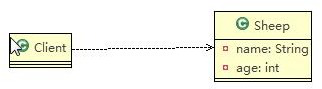
1.2 传统应用
Sheep.java
public class Sheep {
	private String name;
	private int age;
	private String color;

  	public Sheep(String name, int age, String color) {
		super();
		this.name = name;
		this.age = age;
		this.color = color;
	}
}
Client.java
public class Client {

	public static void main(String[] args) {
		//传统的方法
		Sheep sheep = new Sheep("tom", 1, "白色");

		Sheep sheep2 = new Sheep(sheep.getName(), sheep.getAge(), sheep.getColor());
		Sheep sheep3 = new Sheep(sheep.getName(), sheep.getAge(), sheep.getColor());
		Sheep sheep4 = new Sheep(sheep.getName(), sheep.getAge(), sheep.getColor());
		Sheep sheep5 = new Sheep(sheep.getName(), sheep.getAge(), sheep.getColor());
		//....

		System.out.println(sheep);
		System.out.println(sheep2);
		System.out.println(sheep3);
		System.out.println(sheep4);
		System.out.println(sheep5);
		//...
	}
}
1.3 传统方式优缺点:
1)优点是比较好理解,简单易操作。
2)在创建新的对象时,总是需要重新获取原始对象的属性,如果创建的对象比较复杂时,效率较低
3)总是需要重新初始化对象,而不是动态地获得对象运行时的状态, 不够灵活
4)改进的思路分析
	思路:Java 中 Object 类是所有类的根类,Object 类提供了一个 clone()方法,该方法可以将一个 Java 对象复制一份,但是需要实现 clone 的 Java 类必须要实现一个接口 Cloneable,该接口表示该类能够复制且具有复制的能力  =>  原型模式
2.原型模式
2.1 基本介绍:
1)原型模式(Prototype 模式)是指:用原型实例指定创建对象的种类,并且通过拷贝这些原型,创建新的对象
2)原型模式是一种创建型设计模式,允许一个对象再创建另外一个可定制的对象,无需知道如何创建的细节
3)工作原理是:通过将一个原型对象传给那个要发动创建的对象,这个要发动创建的对象通过请求原型对象拷贝它们自己来实施创建,即 对象.clone()
4)形象的理解:孙大圣拔出猴毛, 变出其它孙大圣
2.2 uml类图:
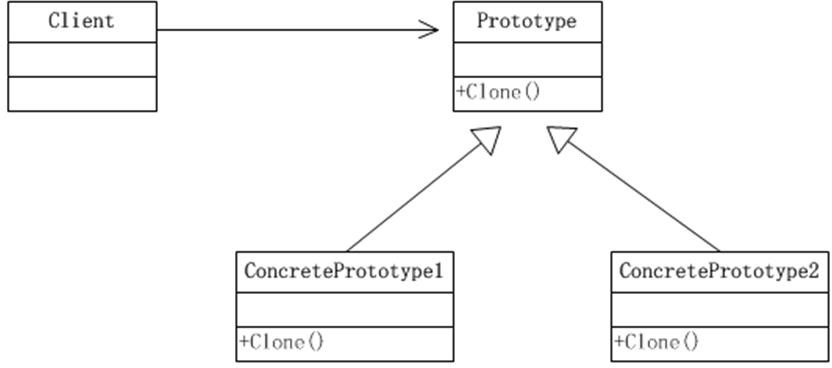
原理结构图说明:
1)Prototype : 原型类,声明一个克隆自己的接口
2)ConcretePrototype: 具体的原型类, 实现一个克隆自己的操作
3)Client: 让一个原型对象克隆自己,从而创建一个新的对象(属性一样)
2.3 应用(浅拷贝)
Sheep.java
//实现Cloneable接口
public class Sheep implements Cloneable {
	private String name;
	private int age;
	private String color;
	private String address = "蒙古羊";
	public Sheep friend; //是对象, 克隆是会如何处理
	public Sheep(String name, int age, String color) {
		super();
		this.name = name;
		this.age = age;
		this.color = color;
	}

	//克隆该实例,使用默认的clone方法来完成
	@Override
	protected Object clone()  {
		Sheep sheep = null;
		try {
			sheep = (Sheep)super.clone();
		} catch (Exception e) {
			System.out.println(e.getMessage());
		}
		return sheep;
	}
}
Client.java
public class Client {

	public static void main(String[] args) {
		System.out.println("原型模式完成对象的创建");
		Sheep sheep = new Sheep("tom", 1, "白色");

		sheep.friend = new Sheep("jack", 2, "黑色");

		Sheep sheep2 = (Sheep)sheep.clone(); //克隆
		Sheep sheep3 = (Sheep)sheep.clone(); //克隆
		Sheep sheep4 = (Sheep)sheep.clone(); //克隆
		Sheep sheep5 = (Sheep)sheep.clone(); //克隆

      	//输出的hashcode码都是一样的(浅拷贝)
		System.out.println("sheep2 =" + sheep2 + "sheep2.friend=" + sheep2.friend.hashCode());
		System.out.println("sheep3 =" + sheep3 + "sheep3.friend=" + sheep3.friend.hashCode());
		System.out.println("sheep4 =" + sheep4 + "sheep4.friend=" + sheep4.friend.hashCode());
		System.out.println("sheep5 =" + sheep5 + "sheep5.friend=" + sheep5.friend.hashCode());
	}
}
3.浅拷贝与深拷贝
3.1 浅拷贝介绍
1)对于数据类型是基本数据类型的成员变量,浅拷贝会直接进行值传递,也就是将该属性值复制一份给新的对象。
2)对于数据类型是引用数据类型的成员变量,比如说成员变量是某个数组、某个类的对象等,那么浅拷贝会进行引用传递,也就是只是将该成员变量的引用值(内存地址)复制一份给新的对象。因为实际上两个对象的该成员变量都指向同一个实例。在这种情况下,在一个对象中修改该成员变量会影响到另一个对象的该成员变量值
3)前面我们克隆羊就是浅拷贝
4)浅拷贝是使用默认的 clone()方法来实现
	sheep = (Sheep) super.clone();
3.2 深拷贝介绍
1)复制对象的所有基本数据类型的成员变量值
2)为所有引用数据类型的成员变量申请存储空间,并复制每个引用数据类型成员变量所引用的对象,直到该对象可达的所有对象。也就是说,对象进行深拷贝要对整个对象(包括对象的引用类型)进行拷贝
3)深拷贝实现方式 1:重写 clone 方法来实现深拷贝
4)深拷贝实现方式 2:通过对象序列化实现深拷贝(推荐)
3.3 应用
DeepCloneableTarget.java
public class DeepCloneableTarget implements Serializable, Cloneable {

	private static final long serialVersionUID = 1L;
	private String cloneName;
	private String cloneClass;

	//构造器
	public DeepCloneableTarget(String cloneName, String cloneClass) {
		this.cloneName = cloneName;
		this.cloneClass = cloneClass;
	}

	//因为该类的属性,都是String , 因此我们这里使用默认的clone完成即可
	@Override
	protected Object clone() throws CloneNotSupportedException {
		return super.clone();
	}
}
DeepProtoType.java
public class DeepProtoType implements Serializable, Cloneable{

	public String name; //String 属性
	public DeepCloneableTarget deepCloneableTarget;// 引用类型
	public DeepProtoType() {
		super();
	}

	//深拷贝 - 方式 1 使用clone 方法
	@Override
	protected Object clone() throws CloneNotSupportedException {

		Object deep = null;
		//这里完成对基本数据类型(属性)和String的克隆
		deep = super.clone();
		//对引用类型的属性,进行单独处理
		DeepProtoType deepProtoType = (DeepProtoType)deep;
		deepProtoType.deepCloneableTarget  = (DeepCloneableTarget)deepCloneableTarget.clone();

		return deepProtoType;
	}

	//深拷贝 - 方式2 通过对象的序列化实现 (推荐)
	public Object deepClone() {
		//创建流对象
		ByteArrayOutputStream bos = null;
		ObjectOutputStream oos = null;
		ByteArrayInputStream bis = null;
		ObjectInputStream ois = null;

		try {
			//序列化
			bos = new ByteArrayOutputStream();
			oos = new ObjectOutputStream(bos);
			oos.writeObject(this); //当前这个对象以对象流的方式输出

			//反序列化
			bis = new ByteArrayInputStream(bos.toByteArray());
			ois = new ObjectInputStream(bis);
			DeepProtoType copyObj = (DeepProtoType)ois.readObject();

			return copyObj;
		} catch (Exception e) {
			e.printStackTrace();
			return null;
		} finally {
			//关闭流
			try {
				bos.close();
				oos.close();
				bis.close();
				ois.close();
			} catch (Exception e2) {
				System.out.println(e2.getMessage());
			}
		}

	}

}
Client.java
public class Client {

	public static void main(String[] args) throws Exception {
		DeepProtoType p = new DeepProtoType();
		p.name = "宋江";
		p.deepCloneableTarget = new DeepCloneableTarget("大牛", "小牛");

		//方式1 完成深拷贝:hashcode码是不同的
//		DeepProtoType p2 = (DeepProtoType) p.clone();
//		System.out.println("p.name=" + p.name + "p.deepCloneableTarget=" + p.deepCloneableTarget.hashCode());
//		System.out.println("p2.name=" + p.name + "p2.deepCloneableTarget=" + p2.deepCloneableTarget.hashCode());

		//方式2 完成深拷贝:hashcode码是不同的
		DeepProtoType p2 = (DeepProtoType) p.deepClone();
		System.out.println("p.name=" + p.name + "p.deepCloneableTarget=" + p.deepCloneableTarget.hashCode());
		System.out.println("p2.name=" + p.name + "p2.deepCloneableTarget=" + p2.deepCloneableTarget.hashCode());

	}

}
4.在Spring框架中的源码分析
Spring 中原型 bean 的创建,就是原型模式的应用
代码分析+debug源码:
Monster.java
public class Monster {
	private Integer id = 10 ;
	private String nickname = "牛魔王";
	private String skill = "芭蕉扇";
	public Monster() {
		System.out.println("monster 创建..");
	}
}
beans.xml
<?xml version="1.0" encoding="UTF-8"?>
<beans xmlns="http://www.springframework.org/schema/beans"
	xmlns:xsi="http://www.w3.org/2001/XMLSchema-instance"
	xmlns:p="http://www.springframework.org/schema/p"
	xmlns:util="http://www.springframework.org/schema/util"
	xmlns:context="http://www.springframework.org/schema/context"
	xsi:schemaLocation="http://www.springframework.org/schema/beans http://www.springframework.org/schema/beans/spring-beans.xsd
		http://www.springframework.org/schema/util http://www.springframework.org/schema/util/spring-util-4.0.xsd
		http://www.springframework.org/schema/context http://www.springframework.org/schema/context/spring-context-4.0.xsd">

 <!-- 这里我们的 scope="prototype" 即 原型模式来创建 -->
 <bean id="id01" class="com.cykj.spring.bean.Monster" scope="prototype"/>

</beans>
ProtoType.java
public class ProtoType {

	public static void main(String[] args) {
		ApplicationContext applicationContext = new ClassPathXmlApplicationContext("beans.xml");
		// 获取monster[通过id获取monster]
      	//在下一行代码打断点进行debug,查看上下文中getBean()方法下的源码
		Object bean = applicationContext.getBean("id01");
		System.out.println("bean" + bean); // 输出 "牛魔王" .....
		Object bean2 = applicationContext.getBean("id01");
		System.out.println("bean2" + bean2); //输出 "牛魔王" .....

		System.out.println(bean == bean2); // false

		// ConfigurableApplicationContext
	}

}
debug下的Spring源码:
AbstractApplicationContext.java
	@Override	//970行
	public Object getBean(String name) throws BeansException {
		assertBeanFactoryActive();
      //通过AbstractBeanFactory类中的getBean(name)方法
		return getBeanFactory().getBean(name);
	}
AbstractBeanFactory.java
	@Override	//193行
	public Object getBean(String name) throws BeansException {
		return doGetBean(name, null, null, false);
	}

	@SuppressWarnings("unchecked")	//232行
	protected <T> T doGetBean(final String name, final Class<T> requiredType, final Object[] args, boolean typeCheckOnly)throws BeansException {
		final String beanName = transformedBeanName(name);
		Object bean;

      final RootBeanDefinition mbd = getMergedLocalBeanDefinition(beanName);
      	// Create bean instance.
      if (mbd.isSingleton()) {		//299行
        sharedInstance = getSingleton(beanName, new ObjectFactory<Object>() {
          @Override
          public Object getObject() throws BeansException {
            try {
              return createBean(beanName, mbd, args);
            }
            catch (BeansException ex) {
              destroySingleton(beanName);
              throw ex;
            }
          }
        });
        bean = getObjectForBeanInstance(sharedInstance, name, beanName, mbd);
      }
      else if (mbd.isPrototype()) {		//318行
        // It's a prototype -> create a new instance.
        Object prototypeInstance = null;
        try {
          beforePrototypeCreation(beanName);
          prototypeInstance = createBean(beanName, mbd, args);
        }
        finally {
          afterPrototypeCreation(beanName);
        }
        bean = getObjectForBeanInstance(prototypeInstance, name, beanName, mbd);
      }
    }
5.注意事项和细节
1)创建新的对象比较复杂时,可以利用原型模式简化对象的创建过程,同时也能够提高效率
2)不用重新初始化对象,而是动态地获得对象运行时的状态
3)如果原始对象发生变化(增加或者减少属性),其它克隆对象的也会发生相应的变化,无需修改代码
4)在实现深克隆的时候可能需要比较复杂的代码
5)缺点:需要为每一个类配备一个克隆方法,这对全新的类来说不是很难,但对已有的类进行改造时,需要修改其源代码,违背了 ocp 原则