1.:first-child 元素所在的父元素的第一个子元素
div:first-child div的父元素的第一个子元素必须是div;否则无效
2. :after 伪元素操作在元素内容之后的内容
<!DOCTYPE html>
<html lang="en">
<head>
    <meta charset="UTF-8">
    <meta name="viewport" content="width=device-width, initial-scale=1.0">
    <meta http-equiv="X-UA-Compatible" content="ie=edge">
    <title>Document</title>
    <style>
        .container {
        font-family: arial, sans-serif;
        margin: 0;
        padding: 0;
        list-style-type: none;
        display: flex;
        flex-wrap: wrap;
        }

        .flex {
        background: #6AB6D8;
        padding: 10px;
        margin-bottom: 50px;
        border: 3px solid #2E86BB;
        color: white;
        font-size: 20px;
        text-align: center;
        position: relative;
        }

        .flex:after {
        position: absolute;
        z-index: 1;
        left: 0;
        top: 100%;
        margin-top: 10px;
         100%;
        color: #333;
        font-size: 18px;
        }

        .flex6:after {
        content: 'fill/-webkit-fill-available/-moz-available';
        }
    </style>
</head>
<body>
      <ul class="container">
        <li class="flex flex6">6: flex-basis test</li>
      </ul>
</body>
</html>
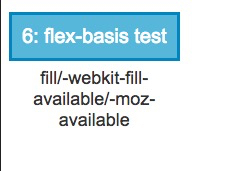
如上图所示,:after表明在li元素的内容之后添加的伪元素,给伪元素添加内容使用content;
该伪元素可以用在一些需要在元素内容后添加内容的地方!!!!