关于TypeError: strptime() argument 1 must be str, not bytes解析
在使用datetime.strptime(s,fmt)来输出结果日期结果时,出现错误
TypeError: strptime() argument 1 must be str, not bytes
我的源代码如下
def datestr2num(s):
return datetime.strptime(s, "%d-%m-%Y").date().weekday()
dates=np.loadtxt('data.csv', delimiter=',', usecols=(1,), converters={1: datestr2num}, unpack=True)
data.csv内容如下
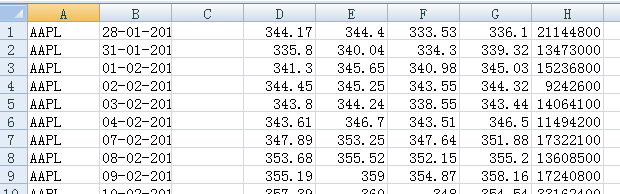
编译器在打开data.csv文件时,将表格里的第2列数组值提取出来返回给dates,第二列值是日期格式字符串,但因为我们是以二进制编码的格式打开第二列值是,返回的值字节字符串bytes,所以需要把它便会string,则对字符串解码用函数decode('asii'),变成string格式。
def datestr2num(s):
return datetime.strptime(s.decode('ascii'), "%d-%m-%Y").date().weekday()
dates=np.loadtxt('data.csv', delimiter=',', usecols=(1,), converters={1: datestr2num}, unpack=True)
从网上摘抄的英文解释如下:
line is a bytestring, because you opened the file in binary mode. You'll need to decode the string; if it is a date string matching the pattern, you can simply use ASCII:
time.strptime(line.decode('ascii'), '%Y-%m-%d ...')You can add a 'ignore' argument to ignore anything non-ASCII, but chances are the line won't fit your date format then anyway.
Note that you cannot pass a value that contains more than the parsed format in it; a line with other text on it notexplicitly covered by the strptime() pattern will not work, whatever codec you used.
And if your input really varies that widely in codecs, you'll need to catch exceptions one way or another anyway.
Aside from UTF-16 or UTF-32, I would not expect you to encounter any codecs that use different bytes for the arabic numerals. If your input really mixes multi-byte and single-byte codecs in one file, you have a bigger problem on your hand, not in the least because newline handling will be majorly messed up.
adb工具安装与配置
mysql
Charles抓包(iOS的http/https请求)
selenium+python第一个自动化脚本
selenium+python环境搭建
python,你好!
tjkd-html
asp
uglifyjs压缩批处理