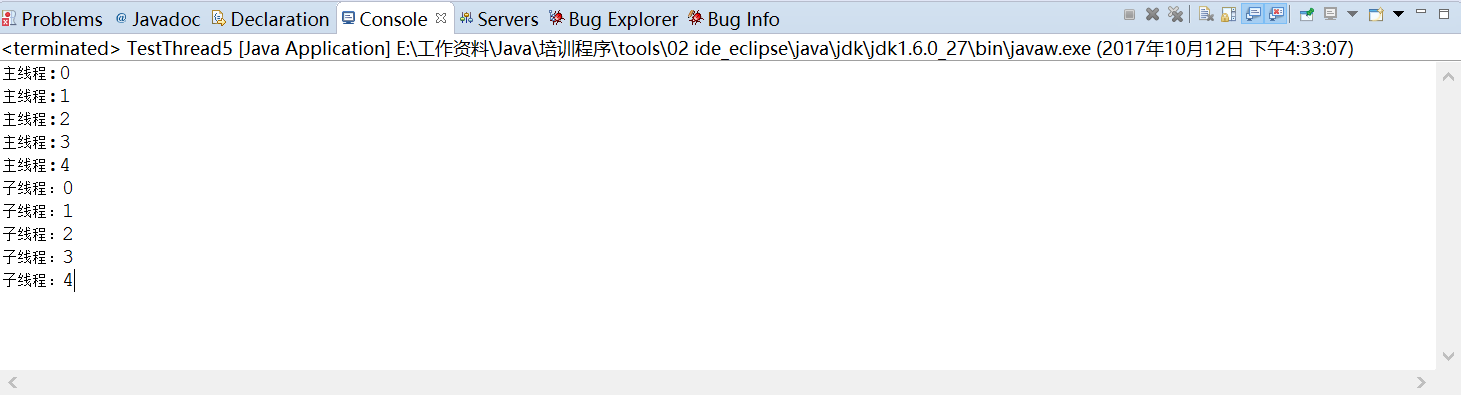
Thread中,join()方法的作用是调用线程等待该线程完成后,才能继续用下运行。
public class TestThread5 {
	public static void main(String[] args) throws InterruptedException {
		Runner0 run5 = new Runner0();
		Thread th5 = new Thread(run5);
		th5.start();
		th5.join();//join()方法用在此处是为了等待主线程结束后运行子线程

		for(int i=0;i<5;i++){
			System.out.println("子线程:"+i);
			}
	}
}
	class Runner0 implements Runnable{
		public void run(){
			for(int i=0;i<5;i++)
				System.out.println("主线程:"+i);
		}
	}
上述代码的运行结构如下所示:
当然,如果不使用join()方法
public class TestThread6{
	public static void main(String[] args) throws InterruptedException {
		Runner0 run5 = new Runner0();
		Thread th5 = new Thread(run5);
		th5.start();
//		th5.join();

		for(int i=0;i<4;i++){
			System.out.println("子线程:"+i);
			}
	}
}
	class Runner0 implements Runnable{
		public void run(){
			for(int i=0;i<4;i++)
				System.out.println("主线程:"+i);
		}
	}
如上代码注释掉jion()方法,
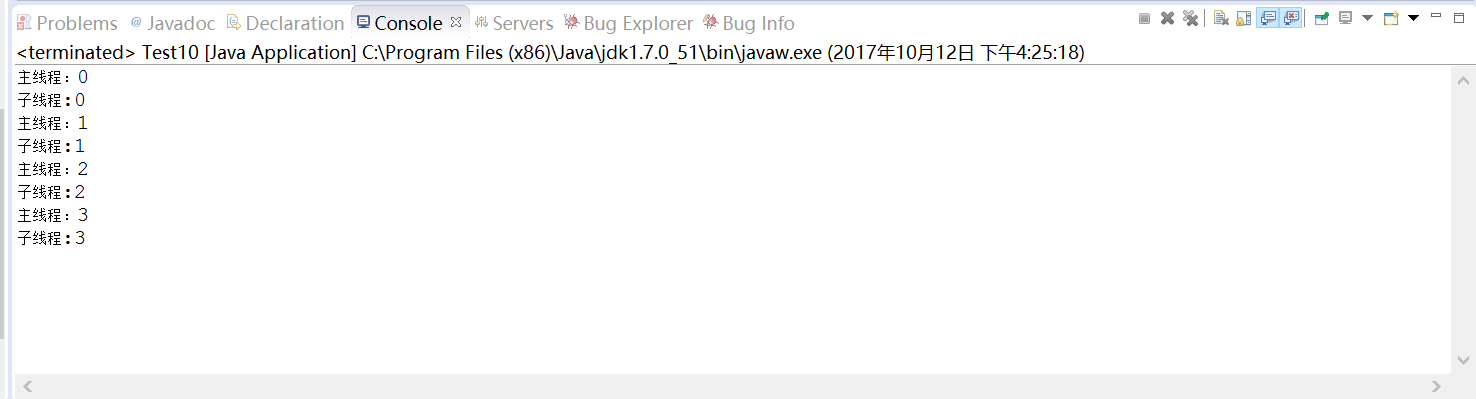
根据上面两个不同的代码,输出的不同,很容易就能理解join()方法。