在RabbitMQ入门(2)——工作队列中,我们学习了如何使用工作队列处理在多个工作者之间分配耗时任务。如果我们需要运行远程主机上的某个方法并等待结果怎么办呢?这种模式就是常说的远程过程调用(Remote Procedure Call),简称RPC。
RPC
尽管RPC在计算机中是一种常见的模式,却经常饱受诟病。当程序员不知道方法的调用是本地的还是速度慢的RPC时,可能导致系统不可控、代码难以调试。因此,滥用RPC可能导致代码无法维护。使用RPC的建议:
- 明确方法的调用时本地的还是远程的。
- 提供文档记录,让组件之间的依赖关系清楚明了。
- 记录错误情况,当RPC服务器长时间宕机时,客户端如何处理
当有疑问是,要避免使用RPC,如果可以,尽量使用异步管道结果被异步推到下一个阶段,而不是像RPC那样阻塞。
这一篇我们将使用RabbitMQ建立一个PRC系统:一个客户端和一个可伸缩的PRC服务器。我们将创建一个返回Fibonacci数的虚拟服务。
客户端接口
为了说明RPC如何使用,首先创建一个客户端的类,它暴露一个名为call的方法发送RPC请求,直到收到应答。
FibonacciRpcClient fibonacciRpc = new FibonacciRpcClient();
String result = fibonacciRpc.call("4");
System.out.println( "fib(4) is " + result);
回调队列(Callback queue)
一般来说,在RabbitMQ上执行RPC是比较简单的。客户端发送请求消息,服务器响应消息。为了接收响应,我们需要发送一个带有“回调”队列地址的请求。可以使用默认的队列,它在java客户端具有唯一性。
callbackQueueName = channel.queueDeclare().getQueue();

BasicProperties props = new BasicProperties
                            .Builder()
                            .replyTo(callbackQueueName)
                            .build();

channel.basicPublish("", "rpc_queue", props, message.getBytes());
消息属性(Message properties)
AMQP 0-9-1协议中预先定义了一组14个带有消息的属性。以下几个是比较常用的:
- deliveryMode :将消息标记为持久的(值为2)或瞬态(任何其他值)。
- contentType : 用于描述编码的mime类型。例如,对于经常使用的JSON编码,将该属性设置为:application/JSON是一种很好的做法。
- replyTo : 通常用来命名一个回调队列
- correlationId : 有助于将RPC响应与请求关联起来
关联ID(Correlation Id)
上面的方法中为每一个RPC请求创建一个回调队列的方式效率很低。幸好我们可以为每个客户端创建一个回调队列。然而这又引出了一个新的问题:回调队列中收到的响应我们并不知道是哪个请求发出的。这就是correlationId 属性的作用,我们将为每个请求设置一个唯一的correlationId 。当我们从回调队列收到一条消息时,首先查看correlationId 属性,这样我们就能将请求和响应对应起来了。如果发现一个未知的correlationId,说明它与我们的请求无关,就可以安全地丢弃这条消息了。
也许你会问为什么忽略回调队列的未知消息而不是处理错误?这可能是服务端的竞态条件导致的。RPC服务器可能在发送响应之后,在发送请求的确认消息之前宕机。这就是为什么我们在客户端必须优雅地处理重复的响应,而RPC在理想情况下应该是幂等的。
总结
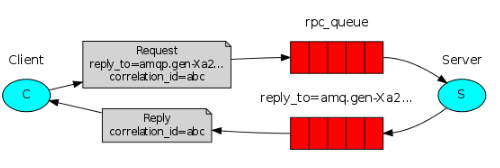
RPC工作流程:
- 当客户端启动时,它将创建一个匿名的唯一回调队列
- 对于RPC请求,客户端会发送一个包含两个属性的消息,
replyTo属性设置回调队列,correlationId为每一个请求设置唯一的值 - 请求被发送到
rpc_queue队列 - RPC服务器正在等待该队列上的请求,当请求到达时,服务器执行任务并使用replyTo字段的队列将结果返回给客户端。
- 客户端等待回调队列。当消息到达时,首先检查
correlationId属性值,如果它和请求的值匹配,它将返回对应用程序的响应
代码清单
RPCServer:
package com.xxyh.rabbitmq;

import com.rabbitmq.client.*;

import java.io.IOException;
import java.util.concurrent.TimeoutException;

public class RPCServer {

    private static final String RPC_QUEUE_NAME = "rpc_queue";

    public static void main(String[] args) {
        ConnectionFactory factory = new ConnectionFactory();
        factory.setHost("localhost");

        Connection connection = null;
        try {
            connection = factory.newConnection();
            Channel channel = connection.createChannel();

            channel.queueDeclare(RPC_QUEUE_NAME, false, false, false, null);

            channel.basicQos(1);

            System.out.println("等待RPC请求......");

            Consumer consumer = new DefaultConsumer(channel) {
                @Override
                public void handleDelivery(String consumerTag, Envelope envelope, AMQP.BasicProperties properties, byte[] body) throws IOException {
                    AMQP.BasicProperties replyProps = new AMQP.BasicProperties
                            .Builder()
                            .correlationId(properties.getCorrelationId())
                            .build();

                    String response = "";

                    try {
                        String message = new String(body,"UTF-8");
                        int n = Integer.parseInt(message);

                        System.out.println(" 计算fib(" + message + ")");
                        response += fib(n);
                    }
                    catch (RuntimeException e){
                        System.out.println(" [.] " + e.toString());
                    }
                    finally {
                        channel.basicPublish( "", properties.getReplyTo(), replyProps, response.getBytes("UTF-8"));

                        channel.basicAck(envelope.getDeliveryTag(), false);
                    }
                }
            };
            channel.basicConsume(RPC_QUEUE_NAME, false, consumer);

            while (true) {
                try {
                    Thread.sleep(100);
                } catch (InterruptedException e) {
                    e.printStackTrace();
                }
            }
        } catch (IOException e) {
            e.printStackTrace();
        } catch (TimeoutException e) {
            e.printStackTrace();
        } finally {
            if (connection != null) {
                try {
                    connection.close();
                } catch (IOException e) {
                    e.printStackTrace();
                }
            }
        }
    }

    private static int fib(int n) {
        if (n == 0) {
            return 0;
        }
        if (n == 1) {
            return 1;
        }
        return fib(n - 1) + fib(n - 2);
    }
}
RPCClient:
package com.xxyh.rabbitmq;

import com.rabbitmq.client.*;

import java.io.IOException;
import java.io.UnsupportedEncodingException;
import java.util.UUID;
import java.util.concurrent.ArrayBlockingQueue;
import java.util.concurrent.BlockingQueue;
import java.util.concurrent.TimeoutException;

public class RPCClient {
    private static final String RPC_QUEUE_NAME = "rpc_queue";

    private Connection connection;
    private Channel channel;
    private String replyQueueName;

    public RPCClient() throws IOException, TimeoutException {
        ConnectionFactory factory = new ConnectionFactory();
        factory.setHost("localhost");

        connection = factory.newConnection();
        channel = connection.createChannel();

        replyQueueName = channel.queueDeclare().getQueue();
    }

    public String call(String message) throws IOException, InterruptedException {
        String corrId = UUID.randomUUID().toString();

        AMQP.BasicProperties props = new AMQP.BasicProperties
                .Builder()
                .correlationId(corrId)
                .replyTo(replyQueueName)
                .build();

        channel.basicPublish("", RPC_QUEUE_NAME, props, message.getBytes("utf-8"));

        final BlockingQueue<String> response = new ArrayBlockingQueue<>(1);

        channel.basicConsume(replyQueueName, true, new DefaultConsumer(channel) {
            @Override
            public void handleDelivery(String consumerTag, Envelope envelope, AMQP.BasicProperties properties, byte[] body) throws IOException {
                if (properties.getCorrelationId().equals(corrId)) {
                    response.offer(new String(body, "utf-8"));
                }
            }
        });
        return response.take();
    }

    public void close() throws IOException {
        connection.close();
    }

    public static void main(String[] args) {
        RPCClient fibonacciRpc = null;
        String response = null;

        try {
            fibonacciRpc = new RPCClient();

            System.out.println(Thread.currentThread().getName() + " 请求 fib(30)");
            response = fibonacciRpc.call("30");
            System.out.println(Thread.currentThread().getName() + " 获得结果: " + response);
        } catch (IOException e) {
            e.printStackTrace();
        } catch (TimeoutException e) {
            e.printStackTrace();
        } catch (InterruptedException e) {
            e.printStackTrace();
        } finally {
            if (fibonacciRpc != null) {
                try {
                    fibonacciRpc.close();
                } catch (IOException e) {
                    e.printStackTrace();
                }
            }
        }
    }
}