概述
在面向对象的软件设计中,我们经常会遇到一类集合对象,这类集合对象的内部结构可能有着各种各样的实现,但是归结起来,无非有两点是需要我们去关心的:一是集合内部的数据存储结构,二是遍历集合内部的数据。面向对象设计原则中有一条是类的单一职责原则,所以我们要尽可能的去分解这些职责,用不同的类去承担不同的职责。Iterator模式就是分离了集合对象的遍历行为,抽象出一个迭代器类来负责,这样既可以做到不暴露集合的内部结构,又可让外部代码透明的访问集合内部的数据。
为什么要写
但现在C#的Foreach in己经替代了迭代器模式的功能,但是作为学习设计模式来说,还是很有好处的.
意图
提供一种方法顺序访问一个聚合对象中各个元素, 而又不需暴露该对象的内部表示。[GOF 《设计模式》]
结构图
<Design Pattern>Iterator模式结构图如下:
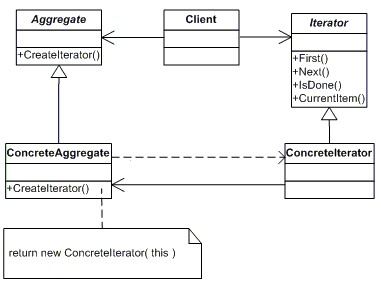
图1 Iterator模式结构图
迭代器模式由以下角色组成:
1.迭代器角色(Iterator):迭代器角色负责定义访问和遍历元素的接口。
2.具体迭代器角色(Concrete Iterator):具体迭代器角色要实现迭代器接口,并要记录遍历中的当前位置。
3.容器角色(Container):容器角色负责提供创建具体迭代器角色的接口。
4.具体容器角色(Concrete Container):具体容器角色实现创建具体迭代器角色的接口——这个具体迭代器角色于该容器的结构相关。
生活中的例子
迭代器提供一种方法顺序访问一个集合对象中各个元素,而又不需要暴露该对象的内部表示。在早期的电视机中,一个拨盘用来改变频道。当改变频道时,需要手工转动拨盘移过每一个频道,而不论这个频道是否有信号。现在的电视机,使用[后一个]和[前一个]按钮。当按下[后一个]按钮时,将切换到下一个预置的频道。想象一下在陌生的城市中的旅店中看电视。当改变频道时,重要的不是几频道,而是节目内容。如果对一个频道的节目不感兴趣,那么可以换下一个频道,而不需要知道它是几频道。
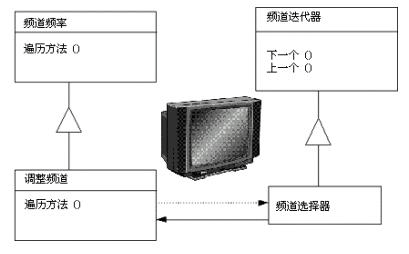
图2 使用选频器做例子的Iterator模式对象图
示例用例图:
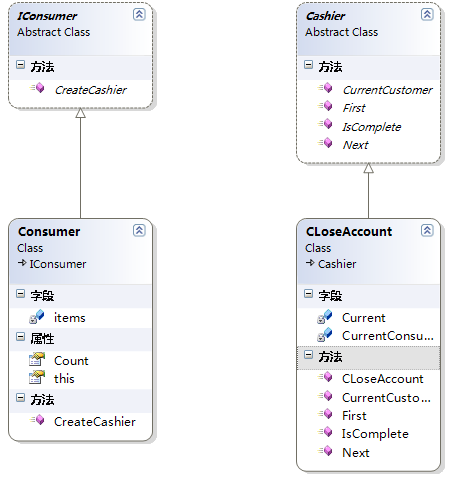
超市顾客排队结帐,收银员一个一个顺序的结帐,正好符合我们的迭代器模式,以下是用例图:
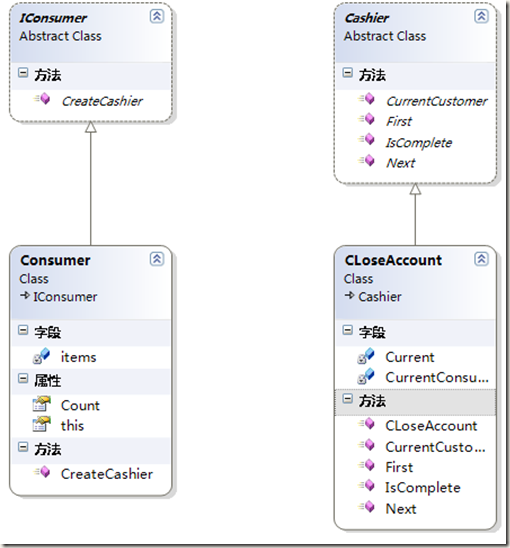
代码设计:
先创建Cashier.cs:
04 |
public abstract class Cashier |
09 |
/// <returns></returns> |
10 |
public abstract object First(); |
15 |
/// <returns></returns> |
16 |
public abstract object Next(); |
21 |
/// <returns></returns> |
22 |
public abstract bool IsComplete(); |
27 |
/// <returns></returns> |
28 |
public abstract object CurrentCustomer(); |
再创建IConsumer.cs:
02 |
/// Create Cashier class |
04 |
public abstract class IConsumer |
09 |
/// <returns></returns> |
10 |
public abstract Cashier CreateCashier(); |
再创建Consumer.cs:
04 |
public class Consumer:IConsumer |
06 |
private IList<object> items = new List<object>(); |
08 |
public override Cashier CreateCashier() |
10 |
return new CLoseAccount(this); |
15 |
get { return items.Count; } |
18 |
public object this[int index] |
20 |
get { return items[index]; } |
21 |
set { items.Insert(index,value); } |
再创建CLoseAccount.cs:
04 |
public class CLoseAccount : Cashier |
06 |
private Consumer CurrentConsumer; |
08 |
private int Current = 0; |
10 |
public override object First() |
12 |
return CurrentConsumer[0]; |
15 |
public override object Next() |
18 |
if (Current < CurrentConsumer.Count) |
19 |
return CurrentConsumer[Current]; |
24 |
public override bool IsComplete() |
26 |
return CurrentConsumer.Count > Current ? true : false; |
29 |
public override object CurrentCustomer() |
31 |
return CurrentConsumer[Current]; |
34 |
public CLoseAccount(Consumer consumer) |
36 |
this.CurrentConsumer = consumer; |
最后调用:
01 |
public partial class Run : Form |
05 |
InitializeComponent(); |
08 |
private void btnRun_Click(object sender, EventArgs e) |
12 |
Consumer consumer = new Consumer(); |
21 |
Cashier cashier = new CLoseAccount(consumer); |
22 |
object custom = cashier.First(); |
23 |
rtbResult.AppendText("顾客排队结帐开始.\n"); |
24 |
while (cashier.IsComplete()) |
26 |
rtbResult.AppendText(string.Format("{0}正在结帐.\n", cashier.CurrentCustomer())); |
29 |
rtbResult.AppendText("结帐完成.\n"); |
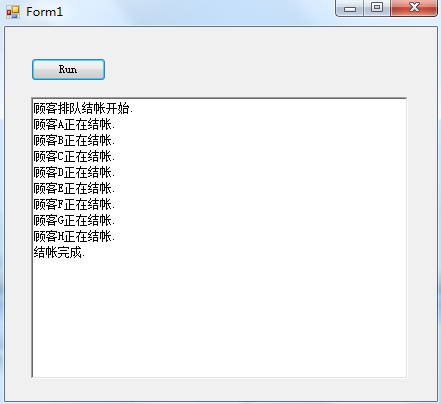
结果如下图:

效果及实现要点
1.迭代抽象:访问一个聚合对象的内容而无需暴露它的内部表示。
2.迭代多态:为遍历不同的集合结构提供一个统一的接口,从而支持同样的算法在不同的集合结构上进行操作。
3.迭代器的健壮性考虑:遍历的同时更改迭代器所在的集合结构,会导致问题。
适用性
1.访问一个聚合对象的内容而无需暴露它的内部表示。
2.支持对聚合对象的多种遍历。
3.为遍历不同的聚合结构提供一个统一的接口(即, 支持多态迭代)。
优点:
1.支持以不同的方式遍历一个容器角色。根据实现方式的不同,效果上会有差别。
2.简化了容器的接口。但是在IList中为了提高可扩展性,容器还是提供了遍历的接口。
3.对同一个容器对象,可以同时进行多个遍历。因为遍历状态是保存在每一个迭代器对象中的。
总结
Iterator模式就是分离了集合对象的遍历行为,抽象出一个迭代器类来负责,这样既可以做到不暴露集合的内部结构,又可让外部代码透明的访问集合内部的数据。