本文为转载,原文地址:Beego学习笔记——Config
配置文件解析
这是一个用来解析文件的库,它的设计思路来自于database/sql,目前支持解析的文件格式有ini、json、xml、yaml,可以通过如下方式进行安装:
go get github.com/astaxie/beego/config
如何使用
首先初始化一个解析器对象
iniconf, err := NewConfig("ini", "testini.conf")
if err != nil {
    t.Fatal(err)
}
然后通过对象获取数据
iniconf.String("appname")
解析器对象支持的函数有如下:


Set(key, val string) error
String(key string) string
Int(key string) (int, error)
Int64(key string) (int64, error)
Bool(key string) (bool, error)
Float(key string) (float64, error)
DIY(key string) (interface{}, error)
接下来看看在我们的学习中怎么去使用这个模块,下面我们将接着上次的文章继续。
首先我们在根目录下新建个配置文件,取名为app.conf,在上面简单写几条配置信息
appname="beegotest"
pageoffset=20
然后在根目录创建个utils的文件夹,在其中增加一个go文件,名为bconfig.go,这个文件是我们用来初始化配置信息的。代码如下
package utils

import (
       "github.com/astaxie/beego/config"
       "fmt"
)
var BConfig config.Configer
func init(){
       var err error
       BConfig, err = config.NewConfig("ini", "app.conf")
       if err != nil{
              fmt.Println("config init error:", err)
       }
}
因为在我们的初始化函数中用到库中的NewConfig函数,该函数的第一个参数为adaptername, 这里我们就默认传“ini”,第二个参数为配置文件名,我们前面建的文件叫app.conf,所以这里传“app.conf”即可。
其中BConfig便是我们初始化的Config对象,是个全局的变量,方便后面的调用。至此,我们的配置初始化便完成了。
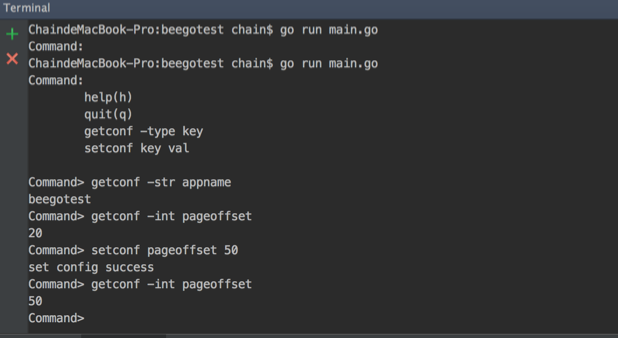
配置的使用就是上面提到的几个函数了。这里我们为我们定义的命令格式为: getconf -type key,其作用为获取类型为type的Key的值,另外个为setconf key val,其作用是设置key的值为val。具体函数如下:
GetConfig
func GetConfig(args []string)int{
       if args[1] == "-int"{
              intConf, err := utils.BConfig.Int(args[2])
              if err != nil{
                     fmt.Println("get type of int from config error:",err)
              }else {
                     fmt.Println(intConf)
              }
       }else if args[1] == "-int64"{
              int64Conf, err := utils.BConfig.Int64(args[2])
              if err != nil{
                     fmt.Println("get type of int64 from config error:",err)
              }else {
                     fmt.Println(int64Conf)
              }
       }else if args[1] == "-bool"{
              boolConf, err := utils.BConfig.Bool(args[2])
              if err != nil{
                     fmt.Println("get type of bool from config error:",err)
              }else {
                     fmt.Println(boolConf)
              }
       }else if args[1] == "-float"{
              floatConf, err := utils.BConfig.Float(args[2])
              if err != nil{
                     fmt.Println("get type of flaot from config error:",err)
              }else {
                     fmt.Println(floatConf)
              }
       }else if args[1] == "-int64"{
              intConf, err := utils.BConfig.Int(args[2])
              if err != nil{
                     fmt.Println("get type of int from config error:",err)
              }else {
                     fmt.Println(intConf)
              }
       }else {
              fmt.Println(utils.BConfig.String(args[2]))
       }
       return 0
}
SetConfig
func SetConfig(args []string)int{
       err := utils.BConfig.Set(args[1], args[2])
       if err != nil{
              fmt.Println("set config error:", err)
       }else{
              fmt.Println("set config success")
       }
       return 0
}
package main

import (
       "bufio"
       "fmt"
       "os"
       "strings"
       _"beegotest/utils"
       "beegotest/utils"
)

func main() {
       r := bufio.NewReader(os.Stdin)
       handlers := GetCommandHandlers()
       Help(nil)

       for {
              fmt.Print("Command> ")
              b, _, _ := r.ReadLine()
              line := string(b)
              tokens := strings.Split(line, " ")

              if handler, ok := handlers[tokens[0]]; ok{
                     ret := handler(tokens)
                     if ret != 0{
                            break
                     }
              }else {
                     fmt.Println("Unknown Command:", tokens[0])
              }
       }
}

func GetCommandHandlers() map[string]func(args []string) int {
       return map[string]func([]string) int{
              "help": Help,
              "h":    Help,
              "quit" : Quit,
              "q":Quit,
              "getconf":GetConfig,
              "setconf":SetConfig,
       }
}

func Help(args []string) int {
       fmt.Println(`Command:
       help(h)
       quit(q)
       getconf -type key
       setconf key val
       `)
       return 0
}

func Quit(args []string) int{
       return 1
}

func GetConfig(args []string)int{
       if args[1] == "-int"{
              intConf, err := utils.BConfig.Int(args[2])
              if err != nil{
                     fmt.Println("get type of int from config error:",err)
              }else {
                     fmt.Println(intConf)
              }
       }else if args[1] == "-int64"{
              int64Conf, err := utils.BConfig.Int64(args[2])
              if err != nil{
                     fmt.Println("get type of int64 from config error:",err)
              }else {
                     fmt.Println(int64Conf)
              }
       }else if args[1] == "-bool"{
              boolConf, err := utils.BConfig.Bool(args[2])
              if err != nil{
                     fmt.Println("get type of bool from config error:",err)
              }else {
                     fmt.Println(boolConf)
              }
       }else if args[1] == "-float"{
              floatConf, err := utils.BConfig.Float(args[2])
              if err != nil{
                     fmt.Println("get type of flaot from config error:",err)
              }else {
                     fmt.Println(floatConf)
              }
       }else if args[1] == "-int64"{
              intConf, err := utils.BConfig.Int(args[2])
              if err != nil{
                     fmt.Println("get type of int from config error:",err)
              }else {
                     fmt.Println(intConf)
              }
       }else {
              fmt.Println(utils.BConfig.String(args[2]))
       }
       return 0
}

func SetConfig(args []string)int{
       err := utils.BConfig.Set(args[1], args[2])
       if err != nil{
              fmt.Println("set config error:", err)
       }else{
              fmt.Println("set config success")
       }
       return 0
}
运行结果如下: