在使用EF Core和设计数据库的时候,通常一对多、多对多关系使用得比较多,但是一对一关系使用得就比较少了。最近我发现实际上EF Core很好地支持了数据库的一对一关系。
数据库
我们先来看看SQL Server数据库中的表:
Person表代表的是一个人,表中有些字段来简单描述一个人,其建表语句如下:
CREATE TABLE [dbo].[Person](
    [ID] [int] IDENTITY(1,1) NOT NULL,
    [PersonCode] [nvarchar](50) NULL,
    [Name] [nvarchar](50) NULL,
    [Age] [int] NULL,
    [City] [nvarchar](50) NULL,
    [CreateTime] [datetime] NULL,
 CONSTRAINT [PK_Person] PRIMARY KEY CLUSTERED
(
    [ID] ASC
)WITH (PAD_INDEX = OFF, STATISTICS_NORECOMPUTE = OFF, IGNORE_DUP_KEY = OFF, ALLOW_ROW_LOCKS = ON, ALLOW_PAGE_LOCKS = ON) ON [PRIMARY],
 CONSTRAINT [IX_Person] UNIQUE NONCLUSTERED
(
    [PersonCode] ASC
)WITH (PAD_INDEX = OFF, STATISTICS_NORECOMPUTE = OFF, IGNORE_DUP_KEY = OFF, ALLOW_ROW_LOCKS = ON, ALLOW_PAGE_LOCKS = ON) ON [PRIMARY]
) ON [PRIMARY]
GO

ALTER TABLE [dbo].[Person] ADD  CONSTRAINT [DF_Person_CreateTime]  DEFAULT (getdate()) FOR [CreateTime]
GO
从上面可以看出,除了主键ID外,我们还设置了列PersonCode为唯一键IX_Person。
然后数据库中还有张表IdentificationCard,其代表的是一个人的身份证,其中列IdentificationNo是身份证号码,其建表语句如下:
CREATE TABLE [dbo].[IdentificationCard](
    [ID] [int] IDENTITY(1,1) NOT NULL,
    [IdentificationNo] [nvarchar](50) NULL,
    [PersonCode] [nvarchar](50) NULL,
    [CreateTime] [datetime] NULL,
 CONSTRAINT [PK_IdentificationCard] PRIMARY KEY CLUSTERED
(
    [ID] ASC
)WITH (PAD_INDEX = OFF, STATISTICS_NORECOMPUTE = OFF, IGNORE_DUP_KEY = OFF, ALLOW_ROW_LOCKS = ON, ALLOW_PAGE_LOCKS = ON) ON [PRIMARY],
 CONSTRAINT [IX_IdentificationCard] UNIQUE NONCLUSTERED
(
    [PersonCode] ASC
)WITH (PAD_INDEX = OFF, STATISTICS_NORECOMPUTE = OFF, IGNORE_DUP_KEY = OFF, ALLOW_ROW_LOCKS = ON, ALLOW_PAGE_LOCKS = ON) ON [PRIMARY]
) ON [PRIMARY]
GO

ALTER TABLE [dbo].[IdentificationCard] ADD  CONSTRAINT [DF_IdentificationCard_CreateTime]  DEFAULT (getdate()) FOR [CreateTime]
GO

ALTER TABLE [dbo].[IdentificationCard]  WITH CHECK ADD  CONSTRAINT [FK_IdentificationCard_Person] FOREIGN KEY([PersonCode])
REFERENCES [dbo].[Person] ([PersonCode])
ON UPDATE CASCADE
ON DELETE CASCADE
GO

ALTER TABLE [dbo].[IdentificationCard] CHECK CONSTRAINT [FK_IdentificationCard_Person]
GO
其中设置外键关系FK_IdentificationCard_Person:通过IdentificationCard表的PersonCode列来关联Person表的PersonCode列,从而指明一张身份证属于哪个Person。
然后我们同样设置了IdentificationCard表的PersonCode列为唯一键IX_IdentificationCard,这样外键FK_IdentificationCard_Person表示的实际上就是一对一关系了,因为IdentificationCard表的一行数据通过列PersonCode只能找到一行Person表数据,而现在IdentificationCard表的PersonCode列又是唯一键,所以反过来Person表在IdentificationCard表中最多也只能找到一行数据,所以这是个典型的一对一关系。
我们还在FK_IdentificationCard_Person外键关系上使用了CASCADE设置了级联删除和级联更新。
EF Core实体
接着我们新建了一个.NET Core控制台项目,使用EF Core的Scaffold-DbContext指令自动从数据库中生成实体,可以看到通过我们在数据库中设置的唯一键和外键,EF Core自动识别出了Person表和IdentificationCard表之间是一对一关系,生成的代码如下:
Person实体,对应的是数据库中的Person表,注意其中包含一个属性IdentificationCard,表示Person表和IdentificationCard表的一对一关系:
using System;
using System.Collections.Generic;

namespace FFCoreOneToOne.Entities
{
    /// <summary>
    /// Person实体,对应数据库中的Person表,可以看到其中有一个IdentificationCard属性,表示Person实体对应一个IdentificationCard实体
    /// </summary>
    public partial class Person
    {
        public int Id { get; set; }
        public string PersonCode { get; set; }
        public string Name { get; set; }
        public int? Age { get; set; }
        public string City { get; set; }
        public DateTime? CreateTime { get; set; }

        public IdentificationCard IdentificationCard { get; set; }
    }
}
IdentificationCard实体,对应的是数据库中的IdentificationCard表,注意其中包含一个属性PersonCodeNavigation,表示IdentificationCard表和Person表的一对一关系:
using System;
using System.Collections.Generic;

namespace FFCoreOneToOne.Entities
{
    /// <summary>
    /// IdentificationCard实体,对应数据库中的IdentificationCard表,可以看到其中有一个PersonCodeNavigation属性,表示IdentificationCard实体对应一个Person实体
    /// </summary>
    public partial class IdentificationCard
    {
        public int Id { get; set; }
        public string IdentificationNo { get; set; }
        public string PersonCode { get; set; }
        public DateTime? CreateTime { get; set; }

        public Person PersonCodeNavigation { get; set; }
    }
}
最后是Scaffold-DbContext指令生成的DbContext类TestDBContext,其中比较重要的地方是OnModelCreating方法中,设置IdentificationCard实体和Person实体间一对一关系的Fluent API代码,我用注释详细阐述了每一步的含义:
using System;
using FFCoreOneToOne.Logger;
using Microsoft.EntityFrameworkCore;
using Microsoft.EntityFrameworkCore.Metadata;

namespace FFCoreOneToOne.Entities
{
    public partial class TestDBContext : DbContext
    {
        public TestDBContext()
        {
        }

        public TestDBContext(DbContextOptions<TestDBContext> options)
            : base(options)
        {
        }

        public virtual DbSet<IdentificationCard> IdentificationCard { get; set; }
        public virtual DbSet<Person> Person { get; set; }

        protected override void OnConfiguring(DbContextOptionsBuilder optionsBuilder)
        {
            if (!optionsBuilder.IsConfigured)
            {
                optionsBuilder.UseSqlServer("Server=localhost;User Id=sa;Password=1qaz!QAZ;Database=TestDB");
            }
        }

        protected override void OnModelCreating(ModelBuilder modelBuilder)
        {
            modelBuilder.Entity<IdentificationCard>(entity =>
            {
                entity.HasIndex(e => e.PersonCode)
                    .HasName("IX_IdentificationCard")
                    .IsUnique();

                entity.Property(e => e.Id).HasColumnName("ID");

                entity.Property(e => e.CreateTime)
                    .HasColumnType("datetime")
                    .HasDefaultValueSql("(getdate())");

                entity.Property(e => e.IdentificationNo).HasMaxLength(50);

                entity.Property(e => e.PersonCode).HasMaxLength(50);

                //设置IdentificationCard实体和Person实体的一对一关系
                entity.HasOne(d => d.PersonCodeNavigation)//HasOne设置IdentificationCard实体中有一个Person实体,可以通过IdentificationCard实体的PersonCodeNavigation属性访问到
                    .WithOne(p => p.IdentificationCard)//WithOne设置Person实体中有一个IdentificationCard实体,可以通过Person实体的IdentificationCard属性访问到
                    .HasPrincipalKey<Person>(p => p.PersonCode)//设置数据库中Person表的PersonCode列是一对一关系的主表键
                    .HasForeignKey<IdentificationCard>(d => d.PersonCode)//设置数据库中IdentificationCard表的PersonCode列是一对一关系的从表外键
                    .OnDelete(DeleteBehavior.Cascade)//由于我们在数据库中开启了IdentificationCard表外键FK_IdentificationCard_Person的级联删除,所以这里也生成了实体级联删除的Fluent API
                    .HasConstraintName("FK_IdentificationCard_Person");//设置IdentificationCard实体和Person实体的一对一关系采用的是数据库外键FK_IdentificationCard_Person
            });

            modelBuilder.Entity<Person>(entity =>
            {
                entity.HasIndex(e => e.PersonCode)
                    .HasName("IX_Person")
                    .IsUnique();

                entity.Property(e => e.Id).HasColumnName("ID");

                entity.Property(e => e.City).HasMaxLength(50);

                entity.Property(e => e.CreateTime)
                    .HasColumnType("datetime")
                    .HasDefaultValueSql("(getdate())");

                entity.Property(e => e.Name).HasMaxLength(50);

                entity.Property(e => e.PersonCode)
                    .IsRequired()
                    .HasMaxLength(50);
            });
        }
    }
}
示例代码
接着我们在.NET Core控制台项目的Program类中定义了些示例代码,其中AddPersonWithIdentificationCard和AddIdentificationCardWithPerson方法使用DbContext来添加数据到数据库,RemoveIdentificationCardFromPerson和RemovePersonFromIdentificationCard方法用来演示如何通过实体的导航属性来删除数据,最后DeleteAllPersons是清表语句,删除数据库中IdentificationCard表和Person表的所有数据。
这里先把示例代码全部贴出来:
using FFCoreOneToOne.Entities;
using Microsoft.EntityFrameworkCore;
using System;
using System.Collections.Generic;
using System.Linq;

namespace FFCoreOneToOne
{
    class Program
    {

        /// <summary>
        /// 删除数据库Person表和IdentificationCard表的所有数据
        /// </summary>
        static void DeleteAllPersons()
        {
            using (TestDBContext dbContext = new TestDBContext())
            {
                dbContext.Database.ExecuteSqlCommand("DELETE FROM [dbo].[IdentificationCard]");
                dbContext.Database.ExecuteSqlCommand("DELETE FROM [dbo].[Person]");
            }
        }

        /// <summary>
        /// 通过添加Person来添加IdentificationCard
        /// </summary>
        static void AddPersonWithIdentificationCard()
        {
            //通过添加Person实体来添加IdentificationCard实体,将Person实体的IdentificationCard属性设置为对应的IdentificationCard实体即可
            using (TestDBContext dbContext = new TestDBContext())
            {
                var james = new Person() { Name = "James", Age = 30, PersonCode = "P001", City = "Beijing" };
                james.IdentificationCard = new IdentificationCard() { IdentificationNo = "510100197512305607" };

                var tom = new Person() { Name = "Tom", Age = 35, PersonCode = "P002", City = "Shanghai" };
                tom.IdentificationCard = new IdentificationCard() { IdentificationNo = "510100197512305609" };

                var sam = new Person() { Name = "Sam", Age = 25, PersonCode = "P003", City = "Chongqing" };
                sam.IdentificationCard = new IdentificationCard() { IdentificationNo = "510100197512305605" };

                dbContext.Person.Add(james);
                dbContext.Person.Add(tom);
                dbContext.Person.Add(sam);

                dbContext.SaveChanges();
            }
        }


        /// <summary>
        /// 通过添加IdentificationCard来添加Person,从EF Core的日志中可以看到使用这种方式还是先执行的插入Person表数据的SQL,再执行的插入IdentificationCard表数据的SQL
        /// </summary>
        static void AddIdentificationCardWithPerson()
        {
            //通过添加IdentificationCard实体来添加Person实体,将IdentificationCard实体的PersonCodeNavigation属性设置为对应的Person实体即可
            using (TestDBContext dbContext = new TestDBContext())
            {
                var jamesCard = new IdentificationCard() { IdentificationNo = "510100197512305607" };
                jamesCard.PersonCodeNavigation = new Person() { Name = "James", Age = 30, PersonCode = "P001", City = "Beijing" };

                var tomCard = new IdentificationCard() { IdentificationNo = "510100197512305609" };
                tomCard.PersonCodeNavigation = new Person() { Name = "Tom", Age = 35, PersonCode = "P002", City = "Shanghai" };

                var samCard = new IdentificationCard() { IdentificationNo = "510100197512305605" };
                samCard.PersonCodeNavigation = new Person() { Name = "Sam", Age = 25, PersonCode = "P003", City = "Chongqing" };

                dbContext.IdentificationCard.Add(jamesCard);
                dbContext.IdentificationCard.Add(tomCard);
                dbContext.IdentificationCard.Add(samCard);

                dbContext.SaveChanges();
            }
        }

        /// <summary>
        /// 通过设置Person实体的IdentificationCard属性为null来删除IdentificationCard表的数据
        /// </summary>
        static void RemoveIdentificationCardFromPerson()
        {
            //先用DbContext从数据库中查询出Person实体,然后设置其IdentificationCard属性为null,来删除IdentificationCard表的数据
            //注意在查询Person实体的时候,记得要用EF Core中Eager Loading的Include方法也查询出IdentificationCard实体,这样我们在设置Person实体的IdentificationCard属性为null后,DbContext才能跟踪到变更,才会在下面调用DbContext.SaveChanges方法时,生成删除IdentificationCard表数据的SQL语句
            using (TestDBContext dbContext = new TestDBContext())
            {
                var james = dbContext.Person.Include(e => e.IdentificationCard).First(e => e.Name == "James");
                james.IdentificationCard = null;

                var tom = dbContext.Person.Include(e => e.IdentificationCard).First(e => e.Name == "Tom");
                tom.IdentificationCard = null;

                var sam = dbContext.Person.Include(e => e.IdentificationCard).First(e => e.Name == "Sam");
                sam.IdentificationCard = null;

                dbContext.SaveChanges();
            }
        }

        /// <summary>
        /// 本来这个方法是想用来通过设置IdentificationCard实体的PersonCodeNavigation属性为null,来删除Person表的数据,但是结果是还是删除的IdentificationCard表数据
        /// </summary>
        static void RemovePersonFromIdentificationCard()
        {
            //原本我想的是,先用DbContext从数据库中查询出IdentificationCard实体,并用EF Core中Eager Loading的Include方法也查询出Person实体,然后设置IdentificationCard实体的PersonCodeNavigation属性为null,来删除Person表的数据
            //结果这样做EF Core最后还是删除的IdentificationCard表的数据,原因是IdentificationCard表是一对一外键关系的从表,设置从表实体的外键属性PersonCodeNavigation为null,EF Core认为的是从表的数据作废,所以删除了从表IdentificationCard中的数据,主表Person的数据还在。。。
            using (TestDBContext dbContext = new TestDBContext())
            {
                var jamesCard = dbContext.IdentificationCard.Include(e => e.PersonCodeNavigation).First(e => e.IdentificationNo == "510100197512305607");
                jamesCard.PersonCodeNavigation = null;

                var tomCard = dbContext.IdentificationCard.Include(e => e.PersonCodeNavigation).First(e => e.IdentificationNo == "510100197512305609");
                tomCard.PersonCodeNavigation = null;

                var samCard = dbContext.IdentificationCard.Include(e => e.PersonCodeNavigation).First(e => e.IdentificationNo == "510100197512305605");
                samCard.PersonCodeNavigation = null;

                dbContext.SaveChanges();
            }
        }

        static void Main(string[] args)
        {
            DeleteAllPersons();

            AddPersonWithIdentificationCard();
            AddIdentificationCardWithPerson();
            RemoveIdentificationCardFromPerson();
            RemovePersonFromIdentificationCard();

            Console.WriteLine("Press any key to quit...");
            Console.ReadKey();
        }
    }
}
AddPersonWithIdentificationCard
首先我们测试AddPersonWithIdentificationCard方法,其通过添加Person实体到数据库来添加IdentificationCard表的数据,更改Main方法的代码如下,并执行程序:
static void Main(string[] args)
{
    DeleteAllPersons();

    AddPersonWithIdentificationCard();
    //AddIdentificationCardWithPerson();
    //RemoveIdentificationCardFromPerson();
    //RemovePersonFromIdentificationCard();

    Console.WriteLine("Press any key to quit...");
    Console.ReadKey();
}
执行后数据库中Person表的数据如下:
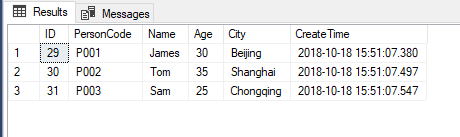
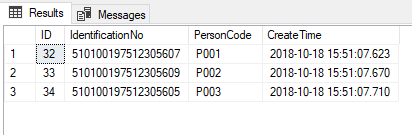
IdentificationCard表的数据如下:
AddIdentificationCardWithPerson
然后我们测试AddIdentificationCardWithPerson方法,其通过添加IdentificationCard实体到数据库来添加Person表的数据,从EF Core的日志中可以看到使用这种方式还是先执行的插入Person表数据的SQL,再执行的插入IdentificationCard表数据的SQL。更改Main方法的代码如下,并执行程序:
static void Main(string[] args)
{
    DeleteAllPersons();

    //AddPersonWithIdentificationCard();
    AddIdentificationCardWithPerson();
    //RemoveIdentificationCardFromPerson();
    //RemovePersonFromIdentificationCard();

    Console.WriteLine("Press any key to quit...");
    Console.ReadKey();
}
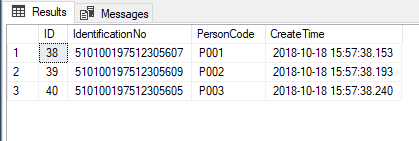
执行后数据库中Person表的数据如下:
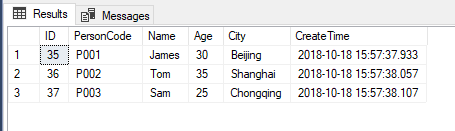
IdentificationCard表的数据如下:
RemoveIdentificationCardFromPerson
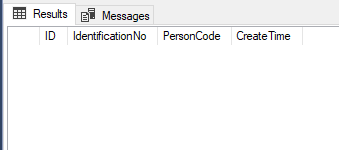
然后我们测试RemoveIdentificationCardFromPerson方法,其通过设置Person实体的IdentificationCard属性为null,来删除IdentificationCard表的数据,更改Main方法的代码如下,并执行程序:
static void Main(string[] args)
{
    DeleteAllPersons();

    AddPersonWithIdentificationCard();
    //AddIdentificationCardWithPerson();
    RemoveIdentificationCardFromPerson();
    //RemovePersonFromIdentificationCard();

    Console.WriteLine("Press any key to quit...");
    Console.ReadKey();
}
执行后数据库中Person表的数据如下:
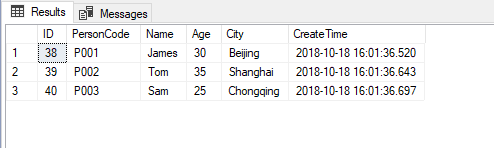
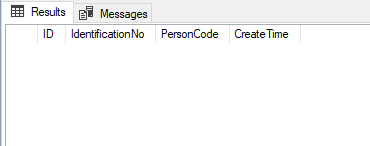
IdentificationCard表的数据如下:
RemovePersonFromIdentificationCard
最后我们测试RemovePersonFromIdentificationCard方法,本来这个方法我是设计用来通过设置IdentificationCard实体的PersonCodeNavigation属性为null,来删除Person表的数据,但是测试后发现结果还是删除的IdentificationCard表的数据,原因可以看下上面示例代码中RemovePersonFromIdentificationCard方法中的注释。更改Main方法的代码如下,并执行程序:
static void Main(string[] args)
{
    DeleteAllPersons();

    AddPersonWithIdentificationCard();
    //AddIdentificationCardWithPerson();
    //RemoveIdentificationCardFromPerson();
    RemovePersonFromIdentificationCard();

    Console.WriteLine("Press any key to quit...");
    Console.ReadKey();
}
执行后数据库中Person表的数据如下:
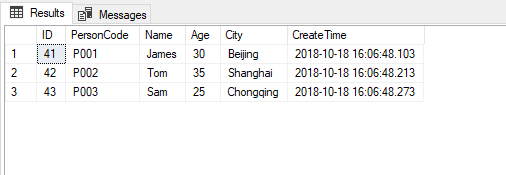
IdentificationCard表的数据如下: