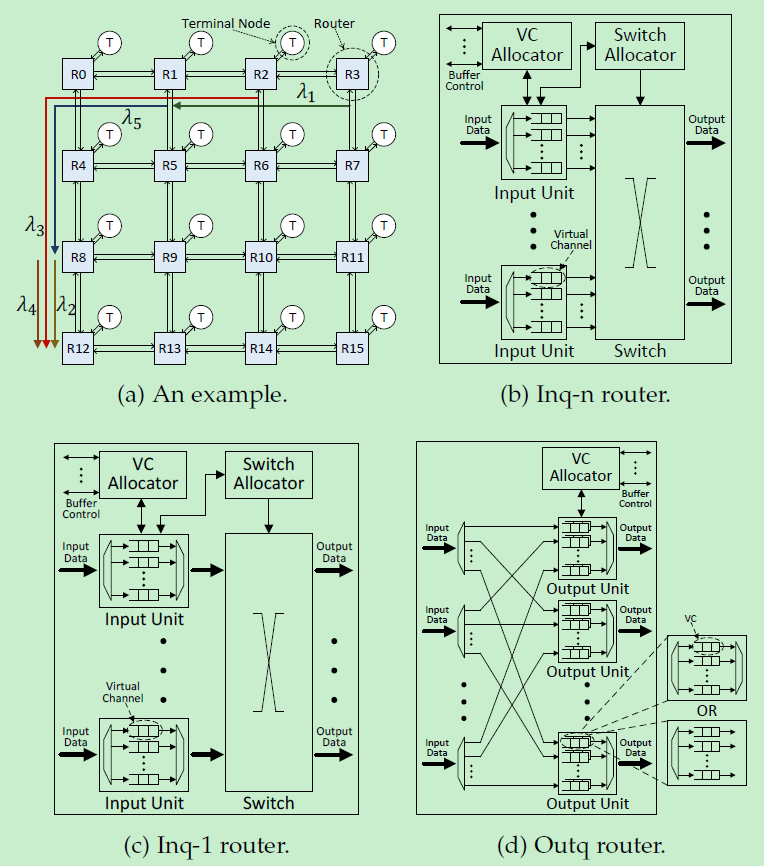
Inq-n. Flits are stored at the input of the router. Each input unit is connected to the switch by as many links
as VCs per input unit. In this type of router, all packets from different VCs in an input unit can pass through these internal links parallelly.
Inq-1. As in Inq-n router, input units store flits. All VCs in an input unit are multiplexed on one internal link to connect to the switch.
In this situation, if two flits from different VCs in an input unit request different output ports simultaneously, only one flit can be forwarded at a time and this means a contention occurs.
Outq. In an output queuing router, flit queues are located at the output of the router. There are a number of buffers associated with each output port and each of these buffers contains multiple VCs. A flit is directly forwarded to the requested output unit and stored in a VC. Since all flits stored in a buffer request the same output port, only one flit gets allocated at a time and the contention scenarios are the same for both Outq routers with and without a multiplexer in each buffer.