Spring框架是每个java程序猿入门级的框架也是最重要的框架,而Spring中也采用了很多的设计模式,这些也会成为我们面试过程中经常会问到的问题,所以本文就整理出Spring中具体使用的哪些设计模式。
Java单例模式
Java原型模式(prototype)
Java模板模式(template)
Java观察者模式(Observer)
Java工厂模式
Java适配器模式(adapter)
Java装饰者模式(decorator)
Java代理模式
Java策略模式(Strategy)
@
Spring使用的设计模式
1.单例模式
单例模式应该是大家印象最深的一种设计模式了。在Spring中最明显的使用场景是在配置文件中配置注册bean对象的时候设置scope的值为singleton。
<?xml version="1.0" encoding="UTF-8"?>
<beans xmlns="http://www.springframework.org/schema/beans"
	xmlns:xsi="http://www.w3.org/2001/XMLSchema-instance"
	xsi:schemaLocation="http://www.springframework.org/schema/beans
 http://www.springframework.org/schema/beans/spring-beans.xsd">
	<bean class="com.dpb.pojo.User" id="user" scope="singleton">
		<property name="name" value="波波烤鸭"></property>
	</bean>
</beans>
源码实现:AbstractBeanFactory的getBean方法中
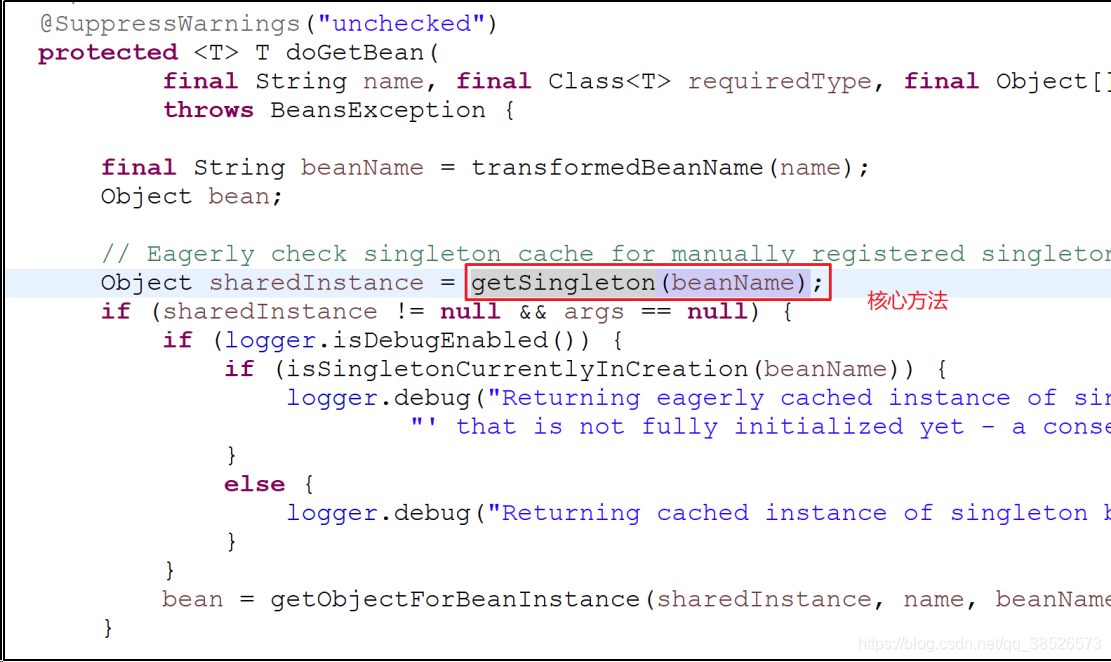
protected Object getSingleton(String beanName, boolean allowEarlyReference) {
	Object singletonObject = this.singletonObjects.get(beanName);
	if (singletonObject == null && isSingletonCurrentlyInCreation(beanName)) {
		synchronized (this.singletonObjects) {
			singletonObject = this.earlySingletonObjects.get(beanName);
			if (singletonObject == null && allowEarlyReference) {
				ObjectFactory<?> singletonFactory = this.singletonFactories.get(beanName);
				if (singletonFactory != null) {
					singletonObject = singletonFactory.getObject();
					this.earlySingletonObjects.put(beanName, singletonObject);
					this.singletonFactories.remove(beanName);
				}
			}
		}
	}
	return (singletonObject != NULL_OBJECT ? singletonObject : null);
}
双重判断加锁的实现!!!
2.原型模式
原型模式也叫克隆模式,Spring中该模式使用的很明显,和单例一样在bean标签中设置scope的属性为prototype即表示该bean以克隆的方式生成
<?xml version="1.0" encoding="UTF-8"?>
<beans xmlns="http://www.springframework.org/schema/beans"
	xmlns:xsi="http://www.w3.org/2001/XMLSchema-instance"
	xsi:schemaLocation="http://www.springframework.org/schema/beans
 http://www.springframework.org/schema/beans/spring-beans.xsd">
	<bean class="com.dpb.pojo.User" id="user" scope="prototype">
		<property name="name" value="波波烤鸭"></property>
	</bean>
</beans>
3.模板模式
模板模式的核心是父类定义好流程,然后将流程中需要子类实现的方法就抽象话留给子类实现,Spring中的JdbcTemplate就是这样的实现。我们知道jdbc的步骤是固定的(
- 加载驱动,
- 获取连接通道,
- 构建sql语句.
- 执行sql语句,
- 关闭资源),
在这些步骤中第3步和第四步是不确定的,所以就留给客户实现,而我们实际使用JdbcTemplate的时候也确实是只需要构建SQL就可以了.这就是典型的模板模式。我们以query方法为例来看下JdbcTemplate中的代码
// 在execute方法中定义好了jdbc操作的流程
// action.doInStatement(stmtToUse);是回调方法也就是钩子
@Override
public <T> T execute(StatementCallback<T> action) throws DataAccessException {
	Assert.notNull(action, "Callback object must not be null");

	Connection con = DataSourceUtils.getConnection(getDataSource());
	Statement stmt = null;
	try {
		Connection conToUse = con;
		if (this.nativeJdbcExtractor != null &&
				this.nativeJdbcExtractor.isNativeConnectionNecessaryForNativeStatements()) {
			conToUse = this.nativeJdbcExtractor.getNativeConnection(con);
		}
		stmt = conToUse.createStatement();
		applyStatementSettings(stmt);
		Statement stmtToUse = stmt;
		if (this.nativeJdbcExtractor != null) {
			stmtToUse = this.nativeJdbcExtractor.getNativeStatement(stmt);
		}
		T result = action.doInStatement(stmtToUse);
		handleWarnings(stmt);
		return result;
	}
	catch (SQLException ex) {
		// Release Connection early, to avoid potential connection pool deadlock
		// in the case when the exception translator hasn't been initialized yet.
		JdbcUtils.closeStatement(stmt);
		stmt = null;
		DataSourceUtils.releaseConnection(con, getDataSource());
		con = null;
		throw getExceptionTranslator().translate("StatementCallback", getSql(action), ex);
	}
	finally {
		JdbcUtils.closeStatement(stmt);
		DataSourceUtils.releaseConnection(con, getDataSource());
	}
}
query方法
@Override
public <T> T query(final String sql, final ResultSetExtractor<T> rse) throws DataAccessException {
	Assert.notNull(sql, "SQL must not be null");
	Assert.notNull(rse, "ResultSetExtractor must not be null");
	if (logger.isDebugEnabled()) {
		logger.debug("Executing SQL query [" + sql + "]");
	}
	// 实现模板中预留的功能
	class QueryStatementCallback implements StatementCallback<T>, SqlProvider {
		@Override
		public T doInStatement(Statement stmt) throws SQLException {
			ResultSet rs = null;
			try {
				// 此处具体执行查询操作
				rs = stmt.executeQuery(sql);
				ResultSet rsToUse = rs;
				if (nativeJdbcExtractor != null) {
					rsToUse = nativeJdbcExtractor.getNativeResultSet(rs);
				}
				// 处理数据封装操作
				return rse.extractData(rsToUse);
			}
			finally {
				JdbcUtils.closeResultSet(rs);
			}
		}
		@Override
		public String getSql() {
			return sql;
		}
	}

	return execute(new QueryStatementCallback());
}
4.观察者模式
观察者模式定义的是对象间的一种一对多的依赖关系,当一个对象的状态发生改变时,所有依赖于它的对象都得到通知并被自动更新。使用比较场景是在监听器中而spring中Observer模式常用的地方也是listener的实现。如ApplicationListener。 Spring中的事件监听请参考我的另一篇文章
Spring之事件监听(观察者模型)
5.工厂模式
简单工厂模式
简单工厂模式就是通过工厂根据传递进来的参数决定产生哪个对象。Spring中我们通过getBean方法获取对象的时候根据id或者name获取就是简单工厂模式了。
<?xml version="1.0" encoding="UTF-8"?>
<beans xmlns="http://www.springframework.org/schema/beans"
	xmlns:xsi="http://www.w3.org/2001/XMLSchema-instance"
	xmlns:context="http://www.springframework.org/schema/context"
	xsi:schemaLocation="http://www.springframework.org/schema/beans http://www.springframework.org/schema/beans/spring-beans.xsd
		http://www.springframework.org/schema/context http://www.springframework.org/schema/context/spring-context-4.3.xsd">

	<context:annotation-config/>
	<bean class="com.dpb.pojo.User" id="user"  >
		<property name="name" value="波波烤鸭"></property>
	</bean>
</beans>
工厂方法模式
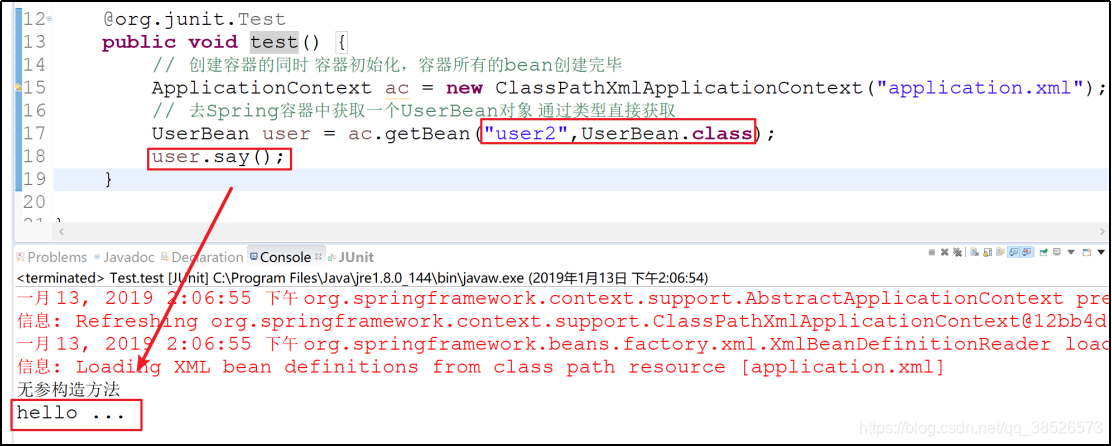
在Spring中我们一般是将Bean的实例化直接交给容器去管理的,实现了使用和创建的分离,这时容器直接管理对象,还有种情况是,bean的创建过程我们交给一个工厂去实现,而Spring容器管理这个工厂。这个就是我们讲的工厂模式,在Spring中有两种实现一种是静态工厂方法模式,一种是动态工厂方法模式。以静态工厂来演示
/**
 * User 工厂类
 * @author dpb[波波烤鸭]
 *
 */
public class UserFactory {

	/**
	 * 必须是static方法
	 * @return
	 */
	public static UserBean getInstance(){
		return new UserBean();
	}
}
application.xml文件中注册
<beans xmlns="http://www.springframework.org/schema/beans"
	xmlns:xsi="http://www.w3.org/2001/XMLSchema-instance"
	xsi:schemaLocation="http://www.springframework.org/schema/beans
	http://www.springframework.org/schema/beans/spring-beans.xsd">
	<!-- 静态工厂方式配置 配置静态工厂及方法 -->
	<bean class="com.dpb.factory.UserFactory" factory-method="getInstance" id="user2"/>
</beans>
6.适配器模式
将一个类的接口转换成客户希望的另外一个接口。使得原本由于接口不兼容而不能一起工作的那些类可以在一起工作。这就是适配器模式。在Spring中在AOP实现中的Advice和interceptor之间的转换就是通过适配器模式实现的。
class MethodBeforeAdviceAdapter implements AdvisorAdapter, Serializable {

	@Override
	public boolean supportsAdvice(Advice advice) {
		return (advice instanceof MethodBeforeAdvice);
	}

	@Override
	public MethodInterceptor getInterceptor(Advisor advisor) {
		MethodBeforeAdvice advice = (MethodBeforeAdvice) advisor.getAdvice();
		// 通知类型匹配对应的拦截器
		return new MethodBeforeAdviceInterceptor(advice);
	}
}
详细介绍可以参考此文Spring之AOP适配器模式
7.装饰者模式
装饰者模式又称为包装模式(Wrapper),作用是用来动态的为一个对象增加新的功能。装饰模式是一种用于代替继承的技术,无须通过继承增加子类就能扩展对象的新功能。使用对象的关联关系代替继承关系,更加灵活,同时避免类型体系的快速膨胀。
spring中用到的包装器模式在类名上有两种表现:一种是类名中含有Wrapper,另一种是类名中含有Decorator。基本上都是动态地给一个对象添加一些额外的职责。
具体的使用在Spring session框架中的SessionRepositoryRequestWrapper使用包装模式对原生的request的功能进行增强,可以将session中的数据和分布式数据库进行同步,这样即使当前tomcat崩溃,session中的数据也不会丢失。
查看需要的maven依赖
<dependency>
	<groupId>org.springframework.session</groupId>
	<artifactId>spring-session</artifactId>
	<version>1.3.1.RELEASE</version>
</dependency>
8.代理模式
代理模式应该是大家非常熟悉的设计模式了,在Spring中AOP的实现中代理模式使用的很彻底,如果不了解代理模式欢迎查看我之前的文章,链接在顶部。
9.策略模式
策略模式对应于解决某一个问题的一个算法族,允许用户从该算法族中任选一个算法解决某一问题,同时可以方便的更换算法或者增加新的算法。并且由客户端决定调用哪个算法,spring中在实例化对象的时候用到Strategy模式。
@Override
public Object instantiate(RootBeanDefinition bd, String beanName, BeanFactory owner) {
	// Don't override the class with CGLIB if no overrides.
	if (bd.getMethodOverrides().isEmpty()) {
		Constructor<?> constructorToUse;
		synchronized (bd.constructorArgumentLock) {
			constructorToUse = (Constructor<?>) bd.resolvedConstructorOrFactoryMethod;
			if (constructorToUse == null) {
				final Class<?> clazz = bd.getBeanClass();
				if (clazz.isInterface()) {
					throw new BeanInstantiationException(clazz, "Specified class is an interface");
				}
				try {
					if (System.getSecurityManager() != null) {
						constructorToUse = AccessController.doPrivileged(new PrivilegedExceptionAction<Constructor<?>>() {
							@Override
							public Constructor<?> run() throws Exception {
								return clazz.getDeclaredConstructor((Class[]) null);
							}
						});
					}
					else {
						constructorToUse =	clazz.getDeclaredConstructor((Class[]) null);
					}
					bd.resolvedConstructorOrFactoryMethod = constructorToUse;
				}
				catch (Throwable ex) {
					throw new BeanInstantiationException(clazz, "No default constructor found", ex);
				}
			}
		}
		return BeanUtils.instantiateClass(constructorToUse);
	}
	else {
		// Must generate CGLIB subclass.
		return instantiateWithMethodInjection(bd, beanName, owner);
	}
}