顾名思义,责任链模式(Chain of Responsibility Pattern)为请求创建了一个接收者对象的链。这种模式给予请求的类型,对请求的发送者和接收者进行解耦。这种类型的设计模式属于行为型模式。
在这种模式中,通常每个接收者都包含对另一个接收者的引用。如果一个对象不能处理该请求,那么它会把相同的请求传给下一个接收者,依此类推。
介绍
意图:避免请求发送者与接收者耦合在一起,让多个对象都有可能接收请求,将这些对象连接成一条链,并且沿着这条链传递请求,直到有对象处理它为止。
主要解决:职责链上的处理者负责处理请求,客户只需要将请求发送到职责链上即可,无须关心请求的处理细节和请求的传递,所以职责链将请求的发送者和请求的处理者解耦了。
何时使用:在处理消息的时候以过滤很多道。
如何解决:拦截的类都实现统一接口。
关键代码:Handler 里面聚合它自己,在 HandlerRequest 里判断是否合适,如果没达到条件则向下传递,向谁传递之前 set 进去。
应用实例: 1、红楼梦中的"击鼓传花"。 2、JS 中的事件冒泡。 3、JAVA WEB 中 Apache Tomcat 对 Encoding 的处理,Struts2 的拦截器,jsp servlet 的 Filter。
优点: 1、降低耦合度。它将请求的发送者和接收者解耦。 2、简化了对象。使得对象不需要知道链的结构。 3、增强给对象指派职责的灵活性。通过改变链内的成员或者调动它们的次序,允许动态地新增或者删除责任。 4、增加新的请求处理类很方便。
缺点: 1、不能保证请求一定被接收。 2、系统性能将受到一定影响,而且在进行代码调试时不太方便,可能会造成循环调用。 3、可能不容易观察运行时的特征,有碍于除错。
使用场景: 1、有多个对象可以处理同一个请求,具体哪个对象处理该请求由运行时刻自动确定。 2、在不明确指定接收者的情况下,向多个对象中的一个提交一个请求。 3、可动态指定一组对象处理请求。
注意事项:在 JAVA WEB 中遇到很多应用。
实现
我们创建抽象类 AbstractLogger,带有详细的日志记录级别。然后我们创建三种类型的记录器,都扩展了 AbstractLogger。每个记录器消息的级别是否属于自己的级别,如果是则相应地打印出来,否则将不打印并把消息传给下一个记录器。
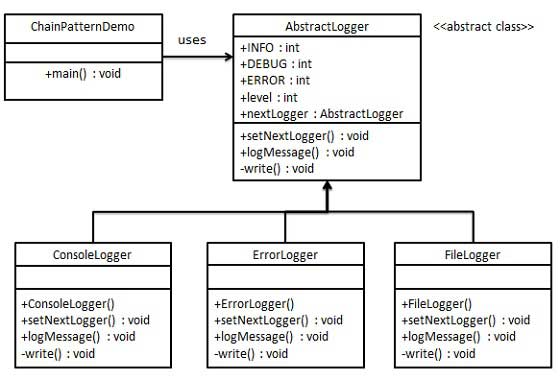
步骤 1
创建抽象的记录器类。
package design.ResponsibilityChain;

/**
 * @author: GuanBin
 * @date: Created in 下午8:31 2020/8/5
 */
public abstract class AbstractLogger {
    public static int INFO = 1;
    public static int DEBUG = 2;
    public static int ERROR = 3;

    protected int level;

    //责任链中的下一个元素
    protected AbstractLogger nextLogger;

    public void setNextLogger(AbstractLogger nextLogger){
        this.nextLogger = nextLogger;
    }

    public void logMessage(int level, String message){
        if(this.level <= level){
            write(message);
        }
        if(nextLogger !=null){
            nextLogger.logMessage(level, message);
        }
    }

    abstract protected void write(String message);
}
步骤 2
创建扩展了该记录器类的实体类。
package design.ResponsibilityChain;

/**
 * @author: GuanBin
 * @date: Created in 下午8:34 2020/8/5
 */
public class ConsoleLogger extends AbstractLogger{

    public ConsoleLogger(int level){
        this.level = level;
    }

    @Override
    protected void write(String message) {
        System.out.println("Standard Console::Logger: " + message);
    }
}
package design.ResponsibilityChain;

/**
 * @author: GuanBin
 * @date: Created in 下午8:38 2020/8/5
 */
public class ErrorLogger extends AbstractLogger {
    public ErrorLogger(int level){
        this.level = level;
    }

    @Override
    protected void write(String message) {
        System.out.println("Error Console::Logger: " + message);
    }
}
package design.ResponsibilityChain;

/**
 * @author: GuanBin
 * @date: Created in 下午8:38 2020/8/5
 */
public class FileLogger extends AbstractLogger {
    public FileLogger(int level){
        this.level = level;
    }

    @Override
    protected void write(String message) {
        System.out.println("File::Logger: " + message);
    }
}
步骤 3
创建不同类型的记录器。赋予它们不同的错误级别,并在每个记录器中设置下一个记录器。每个记录器中的下一个记录器代表的是链的一部分
package design.ResponsibilityChain;

/**
 * @author: GuanBin
 * @date: Created in 下午8:39 2020/8/5
 */
public class ChainPatternDemo {
    private static AbstractLogger getChainOfLoggers(){

        AbstractLogger errorLogger = new ErrorLogger(AbstractLogger.ERROR);
        AbstractLogger fileLogger = new FileLogger(AbstractLogger.DEBUG);
        AbstractLogger consoleLogger = new ConsoleLogger(AbstractLogger.INFO);

        errorLogger.setNextLogger(fileLogger);
        fileLogger.setNextLogger(consoleLogger);

        return errorLogger;
    }

    public static void main(String[] args) {
        AbstractLogger loggerChain = getChainOfLoggers();

        loggerChain.logMessage(AbstractLogger.INFO, "This is an information.");

        loggerChain.logMessage(AbstractLogger.DEBUG,
                "This is a debug level information.");

        loggerChain.logMessage(AbstractLogger.ERROR,
                "This is an error information.");
    }
}
输出:
Connected to the target VM, address: '127.0.0.1:50473', transport: 'socket'
Standard Console::Logger: This is an information.
File::Logger: This is a debug level information.
Standard Console::Logger: This is a debug level information.
Error Console::Logger: This is an error information.
File::Logger: This is an error information.
Standard Console::Logger: This is an error information.
Disconnected from the target VM, address: '127.0.0.1:50473', transport: 'socket'

Process finished with exit code 0
https://www.runoob.com/design-pattern/chain-of-responsibility-pattern.html