序列化
示例代码
from flask import Flask
from flask_restful import Resource, Api, marshal, fields, marshal_with

app = Flask(__name__)
api = Api(app)

class User:
    def __init__(self):
        self.name = '张三'
        self.age = 20
        self.height = 1.8
        self.scores = [80, 75]
        self.info = {
            'gender': True
        }

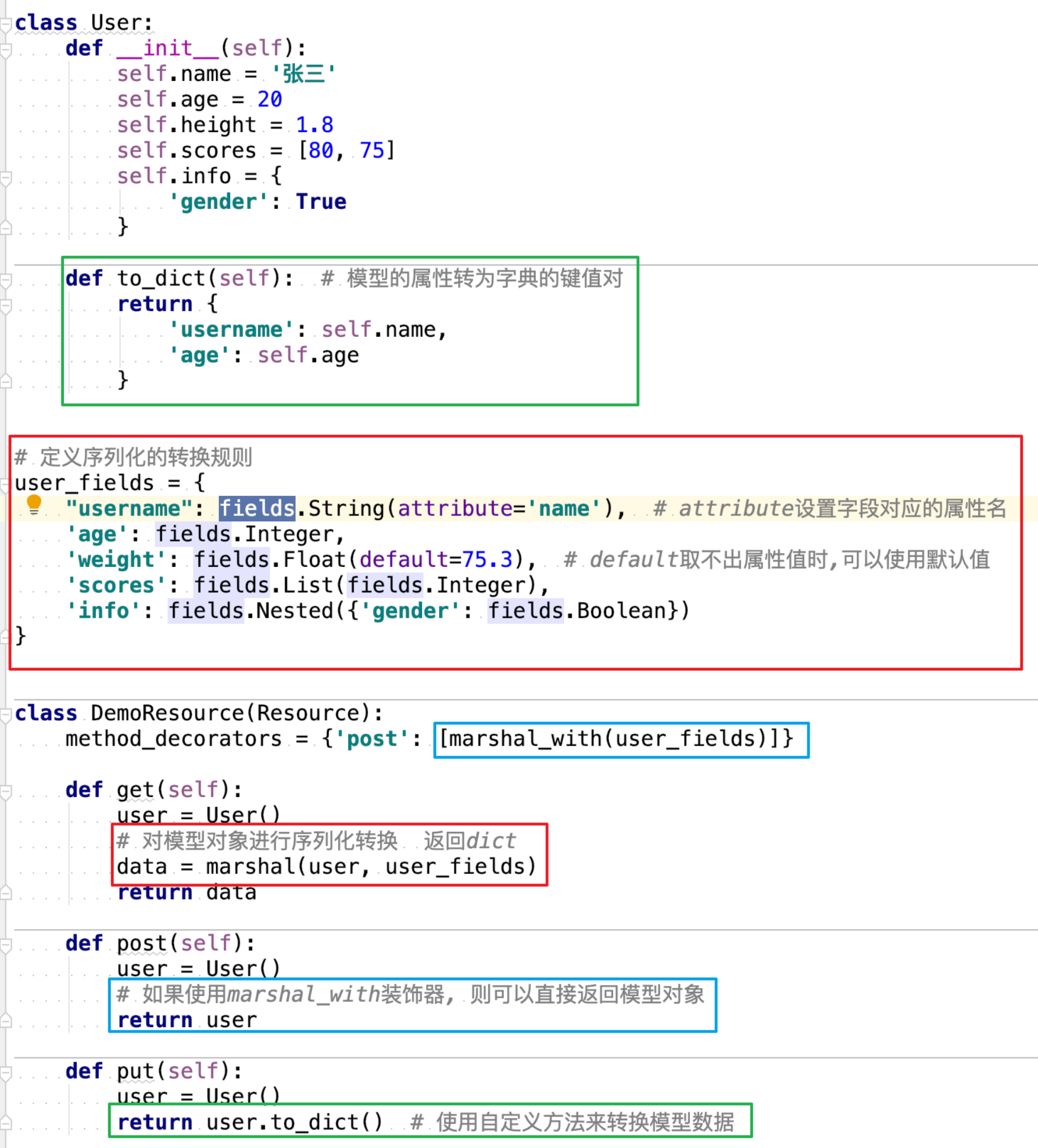
    def to_dict(self):  # 模型的属性转为字典的键值对
        return {
            'username': self.name,
            'age': self.age
        }


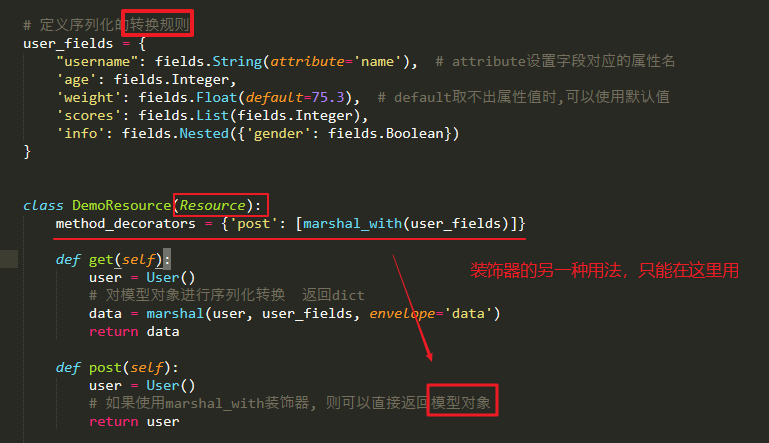
# 定义序列化的转换规则
user_fields = {
    "username": fields.String(attribute='name'),  # attribute设置字段对应的属性名
    'age': fields.Integer,
    'weight': fields.Float(default=75.3),  # default取不出属性值时,可以使用默认值
    'scores': fields.List(fields.Integer),
    'info': fields.Nested({'gender': fields.Boolean})
}


class DemoResource(Resource):
    method_decorators = {'post': [marshal_with(user_fields)]}

    def get(self):
        user = User()
        # 对模型对象进行序列化转换  返回dict
        data = marshal(user, user_fields, envelope='data')
        return data

    def post(self):
        user = User()
        # 如果使用marshal_with装饰器, 则可以直接返回模型对象
        return user

    def put(self):
        user = User()
        return user.to_dict()  # 使用自定义方法来转换模型数据


api.add_resource(DemoResource, '/')


if __name__ == '__main__':
    app.run(debug=True)