Mybatis 官方网站:http://www.mybatis.org/mybatis-3
官方中文教程:http://www.mybatis.org/mybatis-3/zh/index.html
Mybatis 源码:https://github.com/mybatis/mybatis-3
Mybatis API:http://www.mybatis.org/mybatis-3/apidocs/index.html
推荐的blog
https://blog.csdn.net/isea533/article/category/2092001
https://www.cnblogs.com/hellokitty1/p/5216025.html
https://www.cnblogs.com/hellokitty1/p/5218892.html
https://blog.csdn.net/hellozpc/article/details/80878563
Mybatis 视频培训教程
http://edu.51cto.com/course/1354.html
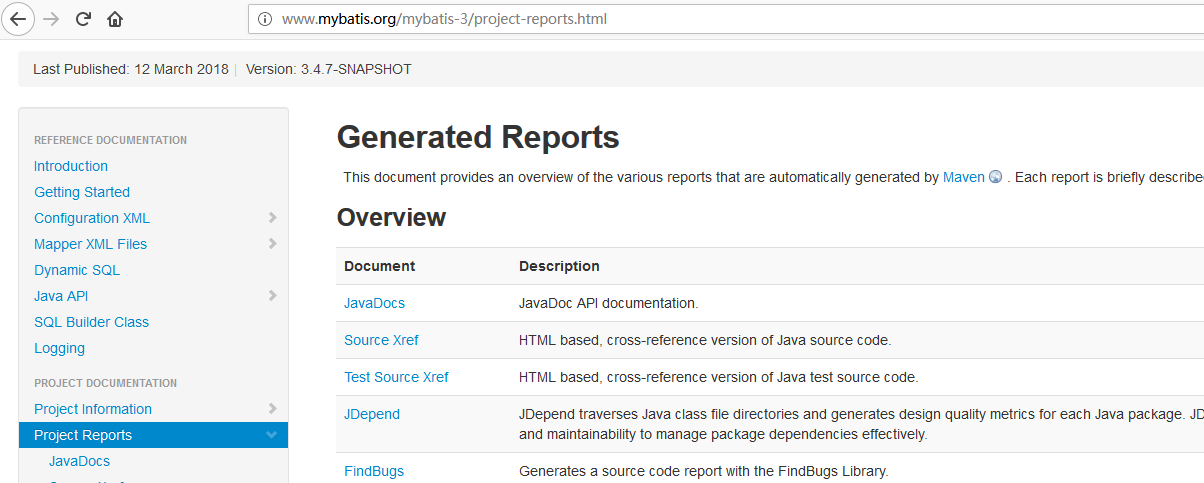
在项目中引入 Mybatis jar 包的两种方式
1. 直接下载 mybatis-x.x.x.jar 文件,然后放到 classpath 路径中
2. 使用 Maven 管理依赖
<dependency>
  <groupId>org.mybatis</groupId>
  <artifactId>mybatis</artifactId>
  <version>x.x.x</version>
</dependency>
配置 Mybatis 的几种方式
1. 使用 xml 配置文件,通常命名为 mybatis-config.xml (推荐)
2. 使用注解
3. 使用 Spring bean 方式进行配置
<?xml version="1.0" encoding="UTF-8"?>
<!DOCTYPE configuration
    PUBLIC "-//mybatis.org//DTD Config 3.0//EN"
    "http://mybatis.org/dtd/mybatis-3-config.dtd" >

<configuration>
    <settings>
        <!-- logImpl 属性配置指定使用 LOG4J 输出日志 -->
        <setting name="logImpl" value="LOG4J" />
    </settings>

    <typeAliases>
        <!-- 配置了一个包的别名,通常使用一个类需要使用全限定名 -->
        <!-- 配置了 package 标签后,就可以只用类名,不需要写出包名 -->
        <package name="tk.mybatis.simple.model" />
    </typeAliases>

    <!-- 配置数据库的链接 -->
    <environments default="development">
    <environment id="development">
        <transactionManager type="JDBC">
            <property name="" value="" />
        </transactionManager>

        <dataSource type="UNPOOLED">
            <property name="driver" value="com.mysql.cj.jdbc.Driver" />
            <property name="url" value="jdbc:mysql://192.168.100.142:3306/mybatis" />
            <property name="username" value="username" />
            <property name="password" value="password" />
        </dataSource>
    </environment>
    </environments>

    <!-- 配置完整的 Mapper.xml 路径 -->
    <mappers>
        <mapper resource="tk/mybatis/simple/mapper/CountryMapper.xml"  />
    </mappers>

</configuration>
创建实体类和 Mapper.xml 文件
Mybatis 是一个结果映射框架,这里创建的实体类实际上是一个数据值对象(Data Value Object),是一个 JavaBean。
在实际应用中,一个表一般会对应一个实体类,一个字段对应一个实体类的属性,用于 INSERT、UPDATE、DELETE 和简单的 SELECT 操作。
Mybatis 默认遵循 “下划线转驼峰”的命名方式,所以在创建实体类的时候一般都按照这种方式进行。
一般用 Mapper 作为 XML 和接口名的后缀,这里的 Mapper 和常用的 DAO 后缀类似。
SQL 语句定义在 Mapper.xml 文件中
<?xml version="1.0" encoding="UTF-8"?>
<!DOCTYPE mapper PUBLIC "-//mybatis.org//DTD Mapper 3.0//EN"
                 "http://mybatis.org/dtd/mybatis-3-mapper.dtd" >
<!-- 根元素,namespace属性定义了当前xml的命名空间 -->
<mapper namespace="tk.mybatis.simple.mapper.CountryMapper">
    <!-- 定义一个select查询 id属性为当前查询定义唯一的id resultType属性定义了返回值类型 -->
    <select id="selectAll" resultType="Country" >
        select id, countryname, countrycode from country
    </select>
</mapper>
编写测试类使用 Mybatis
package tk.mybatis.simple.mapper;

import java.io.IOException;
import java.io.Reader;
import java.util.List;
import org.apache.ibatis.io.Resources;
import org.apache.ibatis.session.SqlSession;
import org.apache.ibatis.session.SqlSessionFactory;
import org.apache.ibatis.session.SqlSessionFactoryBuilder;

import tk.mybatis.simple.model.Country;

public class CountryMapperTest {
    private static SqlSessionFactory sqlSessionFactory;

    //@BeforeClass
    public static void init() {
        try {
            // 该工具类用于将配置文件读入 Reader
            Reader reader = Resources.getResourceAsReader("mybatis-config.xml");
            // 创建 sqlSessionFactory 工厂对象,在创建过程中,首先解析 mybatis-config.xml
            // 读取配置文件中的 mappers 配置后会读取全部的 Mapper.xml 进行具体方法的解析
            // 在这些解析完成后,SqlSessionFactory 就包含了所有的属性配置和执行 SQL 的信息
            sqlSessionFactory = new SqlSessionFactoryBuilder().build(reader);
            reader.close();
        } catch (IOException ignore) {
            ignore.printStackTrace();
        }
    }

    //@Test
    public void testSelectAll() {
        // 通过 SqlSessionFactory 工厂对象获取一个 SqlSession
        SqlSession sqlSession = sqlSessionFactory.openSession();
        try {
            // 通过 selectList 方法查找 Mapper.xml 中的 id="selectAll" select 语句,执行 SQL 查询
            // Mybatis 底层使用 JDBC 执行 SQL,获得查询结果集 ResultSet 后,根据 resultType 的配置
            // 将结果映射为相应类型的集合,返回查询结果
            List<Country> countryList = sqlSession.selectList("selectAll");
            printCountryList(countryList);
        } catch (Exception e) {
            e.printStackTrace();
        } finally {
            sqlSession.close();  // 关闭 sqlsession
        }
    }

    private void printCountryList(List<Country> countryList) {
        for (Country country : countryList) {
            System.out.printf("%-4d%4s%4s
", country.getId(), country.getCountryName(), country.getCountryCode());
        }
    }

    public static void main(String [] args) {
        CountryMapperTest countryMapperTest = new CountryMapperTest();
        CountryMapperTest.init();
        countryMapperTest.testSelectAll();
    }
}