可以用typedef声明新的类型名来代替已有的类型名。
实例1:
#include<stdio.h>
#include<iostream>
typedef struct {
    char* name;
    int age;
}STUDENT;

int main()
{
    STUDENT stu;
    stu.name = "tom";
    stu.age = 12;
    printf("name=%s,age=%d
", stu.name, stu.age);
    system("pause");
    return 0;
}
实例2:
#include<stdio.h>
#include<iostream>
typedef int NUM[100];

int main()
{
    NUM num = {0};
    printf("%d
", sizeof(num));
    system("pause");
    return 0;
}
输出:
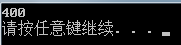
正好是400个字节 ,因为一个整型占4个字节,共100个元素。
实例3:
#include<stdio.h>
#include<iostream>
typedef char* STRING;

int main()
{
    STRING str = "hello";
    printf("%s
", str);
    system("pause");
    return 0;
}
输出:

我们就可以自己定义string类型了。
实例4:
#include<stdio.h>
#include<iostream>
typedef int (*POINTER)(int,int);

int add(int a, int b) {
    return a + b;
}
int main()
{
    int add(int, int);
    POINTER  p;
    p = add;
    int res = p(2, 3);
    printf("%d
", res);
    system("pause");
    return 0;
}
输出:

这样我们也可以定义函数指针。